
Wiper seals
Wiper and Scraper Seals for Cylinder Rods
A wiper, also called a scraper or dust seal, sits at the outer end of a cylinder gland and cleans the rod as it retracts. Its job is to keep grit, mud, water and debris out of the cylinder, where they would wear the rod seal and contaminate the oil. Globseals can help you identify a wiper by rod size and groove, and recommend a type suited to your working environment.
- Snap-in, flanged and metal-cased
- Single and double-acting designs
- Polyurethane, NBR and PTFE options
- Rod size and groove lookup

Overview
The rod seal retains oil, but it is the wiper that protects it. A rod that comes out wet with mud or covered in dust drags that contamination into the gland unless the wiper removes it. Failure of the wiper is one of the most common reasons for early rod seal damage and scored rods. In harsh settings, the wiper often wears first and should be replaced as a routine item.
Wipers are different from heavy-duty scrapers, which are made of metal or hard plastic and are used to cut through dried mud, ice or concrete. Many cylinders use a combination of a metal scraper outside and a polyurethane wiper behind it. Wipers work with the rod seal (see Rod Seals) and wear ring (see Wear Rings and Guide Rings) as part of the gland. The family overview is on Hydraulic Seals, and air-cylinder wipers are covered in Pneumatic Seals.
Wiper and scraper types
Single-acting wipers
Remove contamination from the rod on retraction only. The lip allows lubricating oil to pass out on extension. The most common type.
Double-acting wipers
A second lip retains oil film on the inside of the lip, giving some sealing in both directions. Useful where a thin oil film should be retained or a very clean environment is needed.
Snap-in wipers
Pressed into an open groove, usually with a small step to retain them. Quick to fit, with no separate retainer.
Press-in, metal-cased wipers
A metal case provides firm retention in a bored housing. Used on heavy equipment where the wiper takes impact.
Flanged wipers
A flange holds the wiper against a face and is retained by a cover plate or gland nut. Common on large cylinders.
Metal scrapers
Steel or brass scraper rings for ice, dried mud, concrete or hard deposits. Often used with a polyurethane wiper behind.
Wipers with integrated rod seal
Combined parts, mostly in compact cylinders.
Wiper materials
These notes are typical and general. Always confirm limits against the manufacturer's data for your application.
- Polyurethane: excellent wear and tear resistance, widely used for wipers in mineral-oil cylinders. Some grades are sensitive to hot water and certain chemicals.
- NBR: economical and flexible, but less abrasion-resistant than polyurethane.
- FKM: higher temperatures and chemical exposure, such as in hot or aggressive environments.
- PTFE-based: low friction and chemical resistance, used in demanding or lubricant-free applications.
- Metal cases and scraper rings: steel or brass for retention and for cutting action. Corrosion protection may be needed.
How to select a wiper
- Measure the rod diameter, and the groove diameter, width and depth. Our hydraulic seal measuring guide covers the method.
- Identify the retention method: snap-in, press-in, flanged or retained by a cover.
- Assess the environment: dust, mud, ice, washdown, chemicals or welding spatter.
- Check the stroke speed and temperature, since fast, hot cylinders can overheat a lip.
- Choose single or double-acting based on whether you need oil film retention.
- Replace the wiper with the rod seal during a reseal. A new rod seal behind a worn wiper will fail early.
Information to send us
- Rod diameter and groove diameter, width and depth
- Existing wiper part number or markings
- Cylinder make and model
- Retention method, and whether the groove is open or closed
- Environment: dust, mud, ice, chemicals, washdown
- Temperature range and stroke speed
- Photos of the wiper and gland, and quantity
Genuine and compatible replacements
Genuine wipers are supplied by the cylinder or seal manufacturer. Compatible wipers follow the same profile and groove dimensions, and many common wipers are produced to widely-used profile standards by multiple makers. The difference is often in the lip geometry and polyurethane grade, which affect wear and life. For severe duty, check the material data for abrasion and hydrolysis resistance.
You can enquire about genuine or compatible wipers for equipment from manufacturers such as Hallite, Trelleborg and Freudenberg/Simrit.
How to buy
Wipers are inexpensive compared with the damage they prevent, and are usually replaced in sets.
- Buy online: where a product is listed in the online shop with a confirmed price, you can order directly. Products are being added to the shop progressively, so not every item will be listed yet.
- Request a quote: for custom, bulk, unpriced or repeat-order requirements, send us a quote request with your details.
- Technical review: if you cannot identify the part, or the application is demanding, use Find My Seal or upload a drawing and our team will review it with you.
You can also call head office in Johannesburg on 011 079 6033, or WhatsApp 079 508 0989, or email info@globseals.com.
Options & specifications
| Types | Single-acting, double-acting, snap-in, press-in, flanged, metal scraper |
|---|---|
| Common materials | Polyurethane, NBR, FKM, PTFE-based, steel and brass |
| Fitted at | Outer end of the gland, on the rod |
| Used with | Rod seal, wear ring and backup ring |
| Size reference | Rod diameter, groove diameter, width and depth |
| Applications | Hydraulic and pneumatic cylinders on mobile and industrial equipment |
Options, materials and turnaround are confirmed on your written quote.
How ordering works
- 1
Measure the rod and groove
Record diameters and groove width.
- 2
Identify the type
Snap-in, press-in or flanged.
- 3
Describe the environment
Dust, mud, ice and chemicals.
- 4
Order or review
Buy listed items, request a quote or ask for review.
Frequently asked questions
What is the difference between a wiper and a scraper?
Both clean the rod. "Wiper" usually refers to a flexible lip, while "scraper" suggests a harder edge for heavy deposits. In practice the terms are used interchangeably.
How often should wipers be replaced?
It depends on the environment. In dirty settings, they may be replaced at every service. Inspect for nicks, hardening and gaps against the rod.
Can a wiper stop leakage?
Not as a pressure seal. A wiper is not designed to contain oil under pressure. If oil leaks past it, the rod seal behind is probably failing.
Do I need a double-acting wiper?
Often a single-acting wiper is enough. Double-acting types are chosen when you want a thin oil film retained on the rod or additional exclusion of fine dirt.
Why is my rod scored?
Scoring is often caused by contamination under a worn wiper, rod damage or a hardened seal lip. Rod repair or replacement may be needed. See the seal failure guide.
Request a quote for Wiper and Scraper Seals
Related services
 Hydraulic SealsHydraulic seals contain pressurised oil in cylinders, rams, presses and valves while keeping dirt out and controlling friction.…View
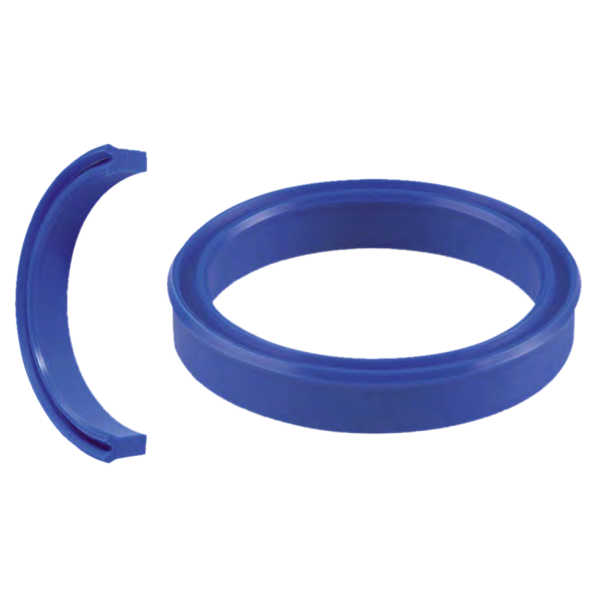 Rod SealsThe rod seal is the main barrier between pressurised oil inside a hydraulic cylinder and the outside world.…View
 Piston SealsA piston seal seals the gap between the piston and the cylinder bore so that pressure on one…View
 Wear Rings and Guide RingsWear rings, also called guide rings, bearing rings or wear bands, are non-sealing rings that keep a piston…View
 Pneumatic SealsPneumatic seals work in compressed-air systems, where the medium is a gas, pressures are lower than in hydraulics…View
 Rotary Shaft and Oil SealsRotary shaft seals, commonly called oil seals, keep lubricant in and contaminants out where a rotating shaft passes…View
 Bonded SealsA bonded seal is a metal washer with an elastomer sealing ring vulcanised to its inside edge. It…View
 V-rings and U-ringsV-rings and U-rings are named for their cross-sections, but they do quite different jobs. A V-ring is an…View
Send the rod size and groove details and we will help you identify the right wiper.
Send your brief, quantities and deadline. We reply with a clear written quote and confirm the turnaround before anything goes to production.
