
Specialist shaft sealing
Carbon Floating Ring Seals
Carbon floating ring seals are non-contacting or lightly contacting restriction seals used on turbines, compressors, blowers and some high-speed pumps. They limit leakage along the shaft with a close clearance rather than a rubbing face. Because they are bespoke to the equipment, they are handled through technical review. Globseals can help you identify the existing seal and quote replacements or equivalents.
- Floating and segmented carbon
- Shaft finish and hardness
- Turbine and compressor duty
- Technical review required

Overview
A floating carbon ring is a ring of carbon-graphite, usually in a housing, that floats radially on the shaft with a very small clearance. Gas or oil leakage is limited by the narrow annulus. Segmented carbon ring seals use several arc-shaped segments held together by a garter spring, so the ring can follow shaft movement and wear in gradually. These seals differ from a face-type mechanical seal, which seals on a rotating face against a stationary face.
Because performance depends on clearances, shaft behaviour and surface condition, treat any replacement as a technical project rather than a catalogue purchase.
Types
- Floating (bushing) carbon rings: one-piece or split rings that centre on the shaft by hydrodynamic action.
- Segmented circumferential seals: arc segments with garter springs and anti-rotation pins.
- Carbon throttle bushes: fixed bushes that limit leakage past a shaft.
- Carbon-graphite wear rings and bearings: for dry-running or chemically aggressive duty.
- Seal housing and spring spares: garter springs, pins, retaining rings.
Carbon grades and shaft requirements
| Item | Options | Honest notes |
|---|---|---|
| Carbon-graphite | Resin-impregnated, antimony, metal or other impregnations | Grade sets wear, strength and chemical resistance; match to the medium. |
| Electrographite | Softer, lower friction | Often used for dry-running. |
| Housing/spring | Stainless steel or alloy | Material depends on temperature and medium. |
| Shaft or sleeve | Hardened or coated, ground and polished | Surface finish and runout govern seal life. |
Operating limits depend on grade and clearance. Values here are typical only; always confirm against the manufacturer's data for your application.
How to approach selection
- Identify the machine: make, model and serial number.
- Record the existing seal arrangement and take photos of every component.
- Measure the shaft or sleeve diameter, housing bore and seal width. Check clearances only against the manufacturer's data.
- Record the medium, temperature, pressure differential and shaft speed.
- State the sealing duty: steam, gas, oil, process gas or dry running.
Related services include seal selection and application engineering and metal machining for shafts, sleeves and housings.
Information to send with your enquiry
The more of the following you can supply, the faster the part can be identified and quoted.
- Machine make, model and serial number
- Seal drawing or part number
- Shaft or sleeve diameter and surface condition
- Housing bore and width
- Medium, temperature, pressure differential, speed
- Quantity and photos of the old seal
- Whether sleeves or housings need repair
Genuine and compatible replacements
Customers can enquire about genuine or compatible replacement parts for equipment from manufacturers such as Burgmann, John Crane, Chesterton, Grundfos, KSB, Flygt, Lowara, Goulds, Sulzer, Flowserve, Klinger, Flexitallic, Trelleborg and others. A genuine part is supplied by or made to the original equipment manufacturer's specification and part number. A compatible part is made to fit the same dimensions and duty, usually by another manufacturer, and may differ in material or finish. Because these seals are built to a specific machine, compatible replacement means a part made to the same dimensions and carbon grade. Without a drawing or sample, supply cannot be confirmed. State clearly in your enquiry which you want, and say whether a part number or sample is available.
How to buy
Globseals supports three ways to buy, and the right one depends on how well the part is defined.
- Buy online where a product listing shows a confirmed price. Products are being added to the shop progressively, so not every item in this category is listed yet.
- Request a quote for custom, bulk or unpriced items. Replacement rings and spring sets are quoted from drawings or samples. Use the quote request page.
- Technical review when identification is unresolved. Most carbon floating ring requests go through technical review because they are specific to the machine. Start with Find My Seal or upload a drawing.
You can also phone 011 079 6033 or WhatsApp 079 508 0989, or email info@globseals.com. See delivery and collection for how orders are handled; courier costs are quoted per order.
Options & specifications
| Types available | Floating rings, segmented ring seals, throttle bushes |
|---|---|
| Materials | Carbon-graphite grades; stainless housings and springs |
| Shaft condition | Hardened or coated, ground and polished |
| Typical use | Turbines, compressors, blowers, high-speed pumps |
| Order mode | Technical review, then quote |
Options, materials and turnaround are confirmed on your written quote.
How ordering works
- 1
Identify
Gather part number, dimensions or a photo of the part.
- 2
Send
Submit it through the quote form, WhatsApp or email.
- 3
Review
Our team checks the details and asks about any gaps.
- 4
Order
Confirm the quote or buy online where a price is listed.
Frequently asked questions
What is the difference between a floating ring seal and a mechanical seal?
A floating ring controls leakage through a very small clearance without a rubbing face, while a mechanical seal uses a sealing interface of rotating and stationary faces.
Do carbon floating ring seals leak?
Some leakage past the clearance is by design. The amount depends on clearance, pressure difference and medium.
Can you supply these from a sample?
A drawing, sample or detailed measurements are needed, and capability is confirmed when you enquire.
Why is the shaft finish important?
A rough, worn or out-of-round shaft changes the clearance and wears the carbon quickly.
Are carbon seals suitable for steam turbines?
They are used in some. Duty and design vary widely, so confirm via technical review.
Request a quote for Carbon Floating Ring Seals
Related services
 Mechanical SealsA mechanical seal controls leakage where a rotating shaft passes through a stationary housing, most often on centrifugal…View
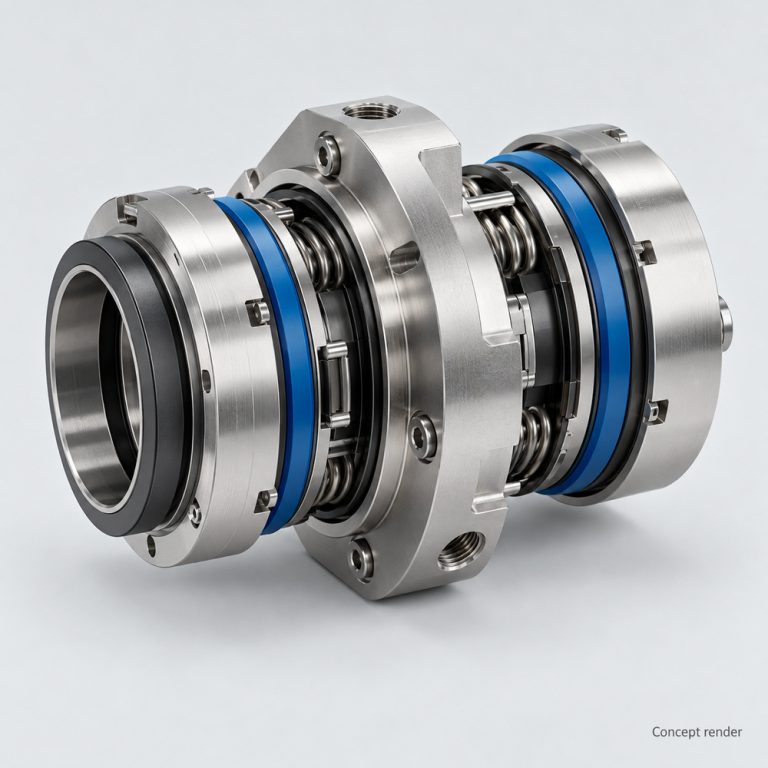 Seal Support and Supply SystemsA mechanical seal does not work alone. It depends on the environment around it: cool, clean liquid at…View
 Shaft Repair SleevesA grooved or worn shaft ruins any new seal or packing set. Instead of replacing or re-machining the…View
 Graphite Gaskets and PackingFlexible graphite is the standard answer for high-temperature joints in steam, thermal oil and hot process lines, and…View
 Seal Selection and Application EngineeringChoosing a seal is a decision about the medium, the temperature, the pressure, the movement and the equipment,…View
 Request a QuoteUse this page for custom, bulk or unpriced items, or whenever you want a written quotation. A good…View
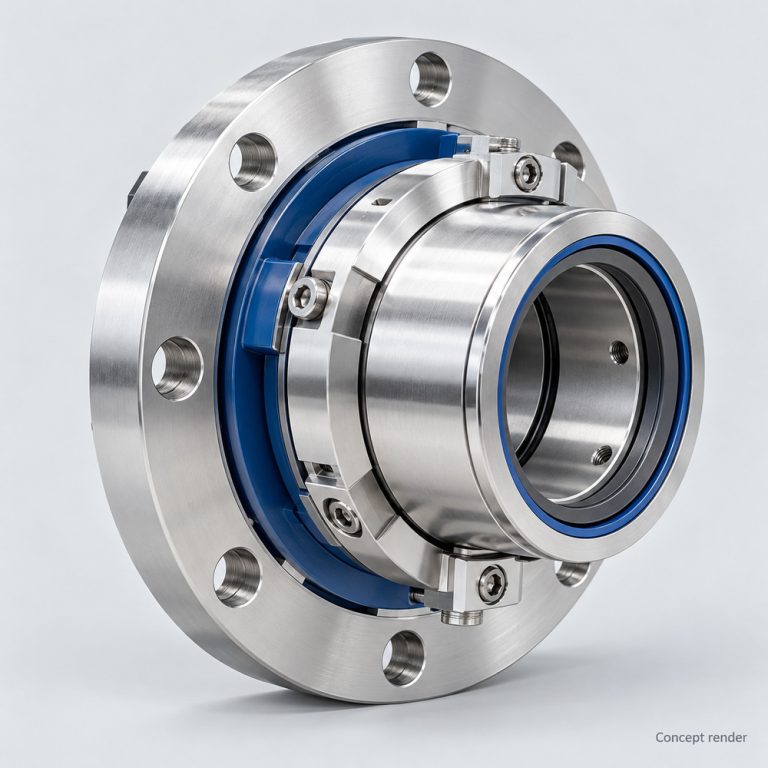 Cartridge SealsA cartridge seal is a complete mechanical seal assembled by the manufacturer on a sleeve and gland plate,…View
 Component Mechanical SealsComponent mechanical seals are supplied as separate parts, not as a factory-assembled cartridge. The fitter sets the working…View
Send machine details and a drawing for a carbon ring seal review.
Send your brief, quantities and deadline. We reply with a clear written quote and confirm the turnaround before anything goes to production.
