
Metric O-rings
Metric O-rings: Sizes, Materials and Selection
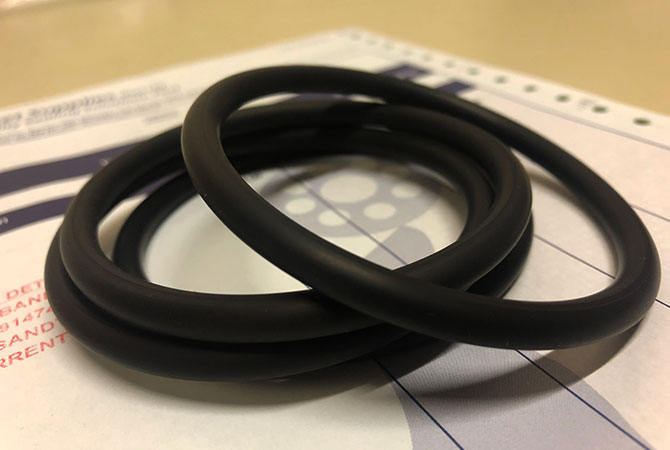
Metric O-rings are described by inside diameter and cross-section in millimetres, for example 20 x 3. They are the most widely used static and dynamic seal in industry, found in hydraulic fittings, pumps, valves, flanges, taps and almost every machine with a fluid. Globseals can help you identify the right size and compound, or quote for loose O-rings, packs and special materials.
- Sized by inside diameter x cross-section
- NBR, EPDM, FKM, silicone and more
- Standard and special sizes
- Groove-based selection advice

Overview
An O-ring seals by being squeezed in a groove, so that its natural elasticity pushes against both surfaces. Fluid pressure adds to this effect, which makes O-rings effective at low and high pressures alike. The catch is that the groove, compression, stretch, surface finish and material must all be right for the ring to work.
Metric sizing is common on equipment built to European and Asian standards. Typical metric cross-sections are 1.5, 2.0, 2.5, 3.0, 3.5, 4.0, 5.0 and 6.0 mm, with many other values such as 1.78, 2.62, 3.53 and 5.33 mm (which are inch-series cross-sections converted to millimetres). If the equipment is inch-based, go to Imperial O-rings. For a continuous length cut to size, see O-ring Cords, and for assorted boxes for the maintenance workshop, see O-ring Kits.
Metric O-ring options
Standard metric sizes
Preferred sizes follow international dimension conventions, so many rings are interchangeable across manufacturers when the inside diameter, cross-section and tolerance class match.
Special and large sizes
Large diameter rings can be moulded or made from cord with a vulcanised joint. Joined rings are suitable for many static uses but are not always appropriate for dynamic or high-pressure service.
Square-cut and X-profile (quad) rings
Alternative profiles for reciprocating use, with improved stability or lower friction. Groove geometry is different, so these are not drop-in replacements for round rings.
Encapsulated and coated rings
An elastomer core in a PTFE or FEP jacket for aggressive chemicals with some elasticity, but with limitations in dynamic use and cost.
Metal-detectable and coloured rings
Specially filled rings can be detected in food and pharma process lines. Material compliance needs technical review.
Rings with backup rings
At higher pressure or larger clearances, a ring may need a backup ring. See Backup Rings.
O-ring materials and hardness
Material choice follows the fluid and temperature. These notes are typical only. Always confirm against the manufacturer's data for your application.
- NBR (nitrile): the workhorse for mineral oils, fuels and water at moderate temperatures. Poor ozone and weather resistance.
- EPDM: good for hot water, steam in suitable grades, brake fluids and many dilute chemicals. Not suitable for mineral oils and fuels.
- FKM (Viton-type): good resistance to oils, fuels and many chemicals and higher temperatures. Limited with hot water, steam and certain solvents in common grades.
- Silicone (VMQ): wide temperature range and good for static use. Poor tear strength and not recommended for dynamic use in most cases.
- HNBR, FFKM, PTFE-encapsulated and others: for tougher chemical, heat or pressure conditions. Availability and cost vary.
- Hardness: 70 Shore A is the common standard. 90 Shore A is used where extrusion is a concern. Hardness does not by itself define quality.
How to select a metric O-ring
- Measure the inside diameter and cross-section. Our O-ring measuring guide explains how, and why a used ring is not always accurate.
- Identify the application: static face seal, static bore seal, or dynamic reciprocating or rotary seal.
- Check the groove. The groove depth sets the compression, and the width must allow the ring to deform without being overfilled.
- Choose the compound from the fluid, temperature and pressure.
- Consider a backup ring for higher pressures or larger gaps.
- Check any compliance requirement for food, potable-water, pharma or oxygen duty, which require technical review and the correct certification documents.
Information to send us
- Inside diameter and cross-section in millimetres (for example 24 x 3)
- Whether the ring is static or dynamic, and what it seals
- Fluid or gas, temperature range and pressure
- Preferred material and hardness, if known
- Groove dimensions, or the equipment make and model
- Quantity, and whether a pack, kit or bulk quantity is wanted
- Any compliance documents required
Genuine and compatible replacements
O-rings are largely standard components, and rings made by different manufacturers to the same size, tolerance and compound are generally interchangeable. Genuine OEM rings may be supplied in machine-specific compounds or sizes. Compatible rings from other sources can serve well, but compound formulation, cure quality and tolerance class differ between suppliers, so for critical applications ask for material data.
You can enquire about genuine or compatible replacement O-rings for equipment from manufacturers such as Freudenberg/Simrit, Trelleborg, Aston Seals and Hallite.
How to buy
Common metric sizes in standard compounds are well suited to online ordering.
- Buy online: where a product is listed in the online shop with a confirmed price, you can order directly. Products are being added to the shop progressively, so not every item will be listed yet.
- Request a quote: for custom, bulk, unpriced or repeat-order requirements, send us a quote request with your details.
- Technical review: if you cannot identify the part, or the application is demanding, use Find My Seal or upload a drawing and our team will review it with you.
You can also call head office in Johannesburg on 011 079 6033, or WhatsApp 079 508 0989, or email info@globseals.com.
Options & specifications
| Size reference | Inside diameter x cross-section in millimetres |
|---|---|
| Common cross-sections | 1.5, 2.0, 2.5, 3.0, 3.5, 4.0, 5.0 and 6.0 mm, plus others |
| Common materials | NBR, EPDM, FKM, silicone, HNBR, FFKM, PTFE-encapsulated |
| Typical hardness | 70 Shore A standard; 90 Shore A for higher pressure |
| Applications | Static face and bore seals, dynamic reciprocating and rotary use |
| Supplied as | Single rings, packs, bulk quantities, kits or cord-made rings |
Options, materials and turnaround are confirmed on your written quote.
How ordering works
- 1
Measure the ring or groove
Record inside diameter and cross-section.
- 2
State the duty
Fluid, temperature, pressure and whether it moves.
- 3
Choose the compound
Select from the shop list or ask for advice.
- 4
Order or review
Buy listed sizes, request a quote, or ask for review.
Frequently asked questions
What does 20 x 3 mean?
It describes an O-ring with a 20 mm inside diameter and a 3 mm cross-section. The outside diameter is therefore about 26 mm.
Can I use an imperial ring in a metric groove?
Sometimes, because some sizes are close, but compression and stretch will differ. Check the actual dimensions against the groove, and if in doubt ask for technical review.
Which O-ring material is best for water?
EPDM is commonly used for water, but suitable compounds depend on temperature and treatment chemicals. Potable-water duty requires technical review and the correct certification documents.
Can I stretch an O-ring to fit?
Slight stretch is normal, but excessive stretch thins the cross-section and shortens life. Typical guidance keeps stretch low. Choose the correct inside diameter rather than relying on stretch.
Do you supply O-rings in bulk?
Send your size list and quantities and we will quote. See also O-ring kits for assorted boxes.
Request a quote for Metric O-rings
Related services
 Imperial O-ringsImperial O-rings are sized in inches, most commonly to the AS568 standard used on American-built equipment, and to…View
 O-ring CordsO-ring cord is round-section elastomer supplied in lengths or coils, used to make O-rings that are not available…View
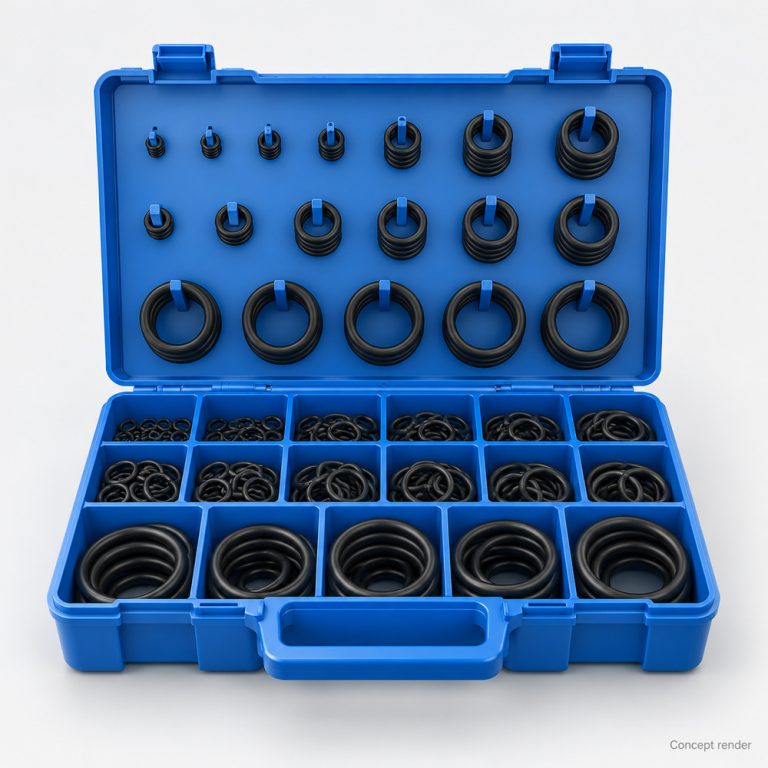 O-ring KitsAn O-ring kit is a boxed assortment of common sizes in one compound, designed so that a maintenance…View
- Backup RingsA backup ring is a hard, thin ring fitted beside an O-ring or lip seal on the low-pressure…View
 Rubber Gaskets and Elastomer ProductsRubber gaskets and elastomer parts cover a broad range: flat gaskets cut from sheet, strip and cord, moulded…View
 Mechanical SealsA mechanical seal controls leakage where a rotating shaft passes through a stationary housing, most often on centrifugal…View
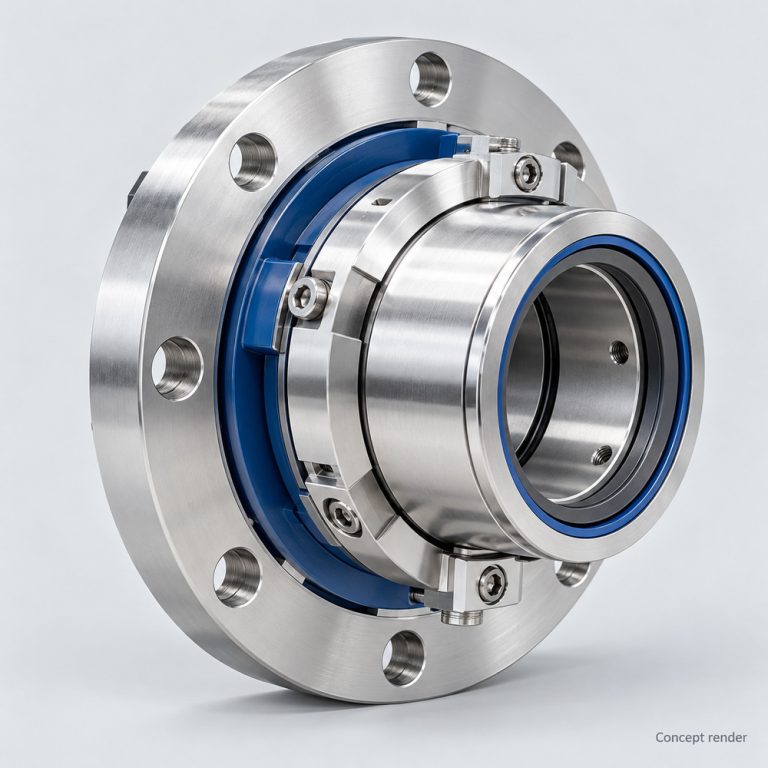 Cartridge SealsA cartridge seal is a complete mechanical seal assembled by the manufacturer on a sleeve and gland plate,…View
 Component Mechanical SealsComponent mechanical seals are supplied as separate parts, not as a factory-assembled cartridge. The fitter sets the working…View
Send the inside diameter, cross-section and duty and we will help you choose the right O-ring.
Send your brief, quantities and deadline. We reply with a clear written quote and confirm the turnaround before anything goes to production.
