Hydraulic seals
Hydraulic Seals for Cylinders, Rams and Presses
Hydraulic seals contain pressurised oil in cylinders, rams, presses and valves while keeping dirt out and controlling friction. A complete cylinder uses several seal types working together: rod seals, piston seals, wipers, wear rings and backup rings. Globseals can help you identify the right profile and material for repair kits and replacement seals, whether you are servicing mobile equipment, industrial presses or mining machinery.
- Rod, piston, wiper and wear rings
- Profiles by groove dimensions
- Seal kits and individual seals
- Measurement help for unknown seals

Overview
Hydraulic seals are chosen for the dynamic conditions in the cylinder: reciprocating speed, pressure peaks, side loads, oil type, temperature and contamination. The same bore can be sealed by very different profiles, depending on whether the machine is a light-duty press or a heavily shock-loaded excavator.
This page is the overview for the family. For specific profiles, see Rod Seals, Piston Seals, Wiper and Scraper Seals, Wear Rings and Guide Rings and Backup Rings. Where the seal is a static or semi-static ring in a groove, the matching page is likely Metric O-rings. For rotating shafts rather than reciprocating rods, go to Rotary Shaft and Oil Seals.
Hydraulic seal types in a cylinder
Rod seals
Seal the piston rod to the gland. They are the primary defence against external leakage. Common forms include U-cup profiles, buffer seals and step seals with PTFE.
Piston seals
Seal the piston to the bore so pressure cannot bypass. Options range from single-acting lip seals to double-acting compact seals and PTFE-energised designs.
Wiper and scraper seals
Clean the rod as it retracts and prevent grit, water and mud entering the cylinder.
Wear rings and guide rings
Carry side loads and keep metal parts from touching. They are not pressure seals.
Backup rings and anti-extrusion rings
Support the seal and prevent extrusion into the clearance gap at high pressure.
Static and gland seals
O-rings, bonded seals and flat gaskets seal the gland, head and port connections. See Bonded Seals.
Hydraulic seal materials
These materials are typical, and temperature, pressure and fluid limits vary widely by compound. Always confirm against the manufacturer's data for your application.
- Polyurethane (AU or EU types): very good wear resistance and extrusion resistance, widely used for rod, piston and wiper seals in mineral-oil systems. Hydrolysis can be an issue in hot water-based fluids for some grades.
- NBR (nitrile): economical and common with mineral hydraulic oils, with moderate temperature range. Often used in O-rings and lip seals.
- FKM (fluoroelastomer): chosen for higher temperatures and some synthetic fluids, but not suitable for all fluids (for example phosphate esters and some brake fluids need specific compounds).
- PTFE and filled PTFE (bronze, carbon, glass): low friction, wide chemical range and good for high speeds, usually paired with an elastomer energiser. Less elastic than rubber, so groove design matters.
- Fabric-reinforced elastomer: multi-ply V-packing and chevron sets for heavy-duty rams.
- Nylon, POM and phenolic resin fabric: used for wear rings and backup rings.
How to choose hydraulic seals
Hydraulic seal selection is built around the groove and the duty.
- Measure the groove. Record the bore or rod diameter, the groove diameter, groove width and depth. Our hydraulic seal measuring guide explains how.
- State the pressure and any pressure spikes. Peaks matter as much as the working figure.
- State the speed and stroke. High-speed or long-stroke applications need low-friction designs.
- Identify the fluid, including fire-resistant or biodegradable types, which restrict compound choice.
- Note the temperature range and the environment, such as mud, dust, washdown or abrasives.
- Decide whether to renew all seals. It is normally best to replace the full set, not a single item.
Information to send us
- Cylinder make and model, or machine type and year
- Existing seal part numbers or markings
- Rod diameter, bore diameter, groove width and depth
- Operating pressure, speed, stroke and temperature
- Hydraulic fluid type
- Photos of the seals and the glands, and a sketch of the groove
- Quantity, or the kit required for a service
Genuine and compatible replacements
Genuine hydraulic seals come from the original equipment manufacturer or from seal brands such as Hallite, Trelleborg or Freudenberg/Simrit, which specify their profiles by name. Compatible seals are produced to the same groove dimensions by other makers and may be offered as direct replacements for named profiles. Where the profile matches the groove and the compound suits the fluid, a compatible seal can be a practical option, but pressure, speed and extrusion limits should be checked, as lower-grade materials can fail quickly in demanding service.
You can enquire about genuine or compatible replacement seals for equipment from manufacturers such as Hallite, Trelleborg, Freudenberg/Simrit and Camozzi.
How to buy
Choose the route that matches how certain you are about the measurements.
- Buy online: where a product is listed in the online shop with a confirmed price, you can order directly. Products are being added to the shop progressively, so not every item will be listed yet.
- Request a quote: for custom, bulk, unpriced or repeat-order requirements, send us a quote request with your details.
- Technical review: if you cannot identify the part, or the application is demanding, use Find My Seal or upload a drawing and our team will review it with you.
You can also call head office in Johannesburg on 011 079 6033, or WhatsApp 079 508 0989, or email info@globseals.com.
Options & specifications
| Seal types | Rod, piston, wiper, wear ring, backup ring, static and gland seals |
|---|---|
| Common profiles | U-cup, compact, step seal, buffer seal, lip seal, cap seal, V-packing |
| Common materials | Polyurethane, NBR, FKM, PTFE and filled PTFE, fabric-reinforced rubber, nylon |
| Typical equipment | Excavators, loaders, presses, rams, tipping gear, lifts, injection moulding machines |
| Sizing data | Rod or bore diameter, groove width and depth, plus cross-section |
| Supplied as | Individual seals, sets or kits depending on the cylinder |
Options, materials and turnaround are confirmed on your written quote.
How ordering works
- 1
Strip and photograph
Take the cylinder apart carefully and photograph the seals as removed.
- 2
Measure the grooves
Record rod or bore diameter and groove dimensions.
- 3
Describe the duty
Add pressure, speed, fluid and temperature.
- 4
Order or review
Buy listed seals or send details for a quote or review.
Frequently asked questions
Can I measure the old seal to find the size?
Old seals swell, shrink or deform, so groove measurements are more reliable than the seal itself. Use the old seal as a reference only, together with the groove and rod or bore diameters.
Should I replace all seals in the cylinder at once?
It is normally recommended. Mixed old and new seals can leave the older parts as the weak link, and you will probably need to dismantle the cylinder again soon.
What fluid affects the seal compound?
Mineral oil, water glycol, phosphate ester, biodegradable esters and others each limit compound choice. State the fluid when you enquire.
Do you supply cylinder repair kits?
Kits depend on the cylinder make and model. Send the details and we will check what can be supplied. See also our hydraulic cylinder sealing support service.
What if I cannot find the groove dimensions?
Send photos, rod and bore diameters and the cylinder make, and we will arrange a technical review. Some measurements may need a visit to a workshop to confirm.
Request a quote for Hydraulic Seals
Related services
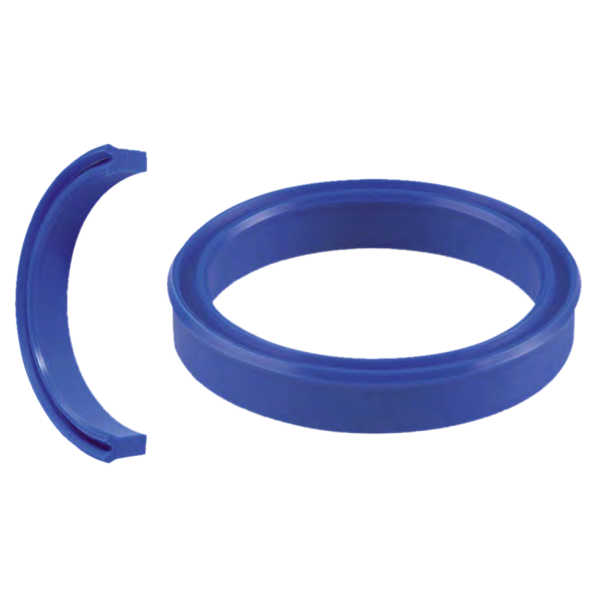 Rod SealsThe rod seal is the main barrier between pressurised oil inside a hydraulic cylinder and the outside world.…View
 Piston SealsA piston seal seals the gap between the piston and the cylinder bore so that pressure on one…View
 Wiper and Scraper SealsA wiper, also called a scraper or dust seal, sits at the outer end of a cylinder gland…View
 Wear Rings and Guide RingsWear rings, also called guide rings, bearing rings or wear bands, are non-sealing rings that keep a piston…View
- Hydraulic Cylinder Sealing SupportA leaking or drifting hydraulic cylinder usually needs the right seal kit, not guesswork. Globseals supports customers with…View
 Pneumatic SealsPneumatic seals work in compressed-air systems, where the medium is a gas, pressures are lower than in hydraulics…View
 Rotary Shaft and Oil SealsRotary shaft seals, commonly called oil seals, keep lubricant in and contaminants out where a rotating shaft passes…View
 Bonded SealsA bonded seal is a metal washer with an elastomer sealing ring vulcanised to its inside edge. It…View
Send the rod and bore sizes or photos of the cylinder and we will help identify the right seals.
Send your brief, quantities and deadline. We reply with a clear written quote and confirm the turnaround before anything goes to production.
