
Identification guide
How to Identify a Mechanical Seal
Mechanical seals come in many designs, and the part number is often worn off or never visible. This guide explains how to work out what you have: the pump, the seal type, the shaft size, the face and elastomer materials, and the information that lets us review a replacement.
- Pump nameplate
- Shaft size
- Seal type
- Photos help
Start with the pump and the nameplate
The pump usually tells you more than the seal. Record the pump make, model and serial number from the nameplate, the shaft diameter and the impeller or casing details. For a branded seal, look for markings on the gland, the stationary seat or the spring and drive collar, and note any numbers or letter codes. Many seals carry no readable marking once installed, so the pump data is often the best route to identification.
Work out the seal type
Look at the way the seal is arranged:
- Single or double. One set of faces, or two sets (back-to-back, face-to-face or tandem) with a barrier or buffer arrangement.
- Pusher or non-pusher. Pusher designs have a secondary seal (usually an O-ring or similar) that slides along the shaft. Bellows designs flex instead of sliding.
- Rotating or stationary spring. Whether the spring or bellows turns with the shaft or stays fixed.
- Cartridge or component. A cartridge arrives pre-assembled on a sleeve with a gland. A component seal is built up on the pump shaft piece by piece.
See our ranges of mechanical seals, cartridge seals and component seals.
Measure the key dimensions
- Shaft or sleeve diameter where the seal sits.
- Installed length from the seal seat face to the point where the rotating part ends, or the working length of the spring if known.
- Stuffing box bore diameter and depth.
- Seat details including the outside diameter and thickness of the stationary seat, and how it is held in place.
- Gland details such as bolt pattern, bolt size and any flush or quench connections.
Take photographs from several angles, with a ruler in frame, before dismantling and again after.
Face and elastomer materials
Typical face pairings include carbon against silicon carbide, silicon carbide against silicon carbide, and tungsten carbide against ceramic or carbide. Secondary seals may be NBR, EPDM, FKM, PTFE-based or other elastomers. You may not be able to tell the materials by eye, so tell us the medium being pumped, the temperature and whether it contains solids. The correct combination depends on the duty and always confirm against the manufacturer's data for your application.
Record the operating duty
The replacement must suit the service, not just fit. Note the product pumped, its temperature, pressure at the seal chamber, shaft speed, whether the pump runs dry at any point, and any flush plan or support system. Support equipment, such as pots, coolers and flush lines, is covered under seal support and supply systems.
Limitations
- Dimensions from a worn seal may not match a new standard seal, because wear, rework and previous substitutions all change them.
- Photographs help but cannot confirm materials.
- A seal that fits physically may still be the wrong design for the duty.
- Some seals are built for one pump model and are not interchangeable with similar-looking designs.
- Hazardous, high-pressure, hydrogen, oxygen, food-contact, pharmaceutical or potable water duty requires technical review and the correct certification documents.
Next steps
Send us the pump details, dimensions, photographs and duty through Find My Seal, upload a drawing or request a quote. Our mechanical seal replacement and identification service reviews the information and tells you whether anything further is needed. Failure history helps too; see common causes of seal failure.
Options & specifications
| Key information | Pump make and model, shaft diameter, installed length |
|---|---|
| Seal designs | Single, double, pusher, bellows, cartridge, component |
Options, materials and turnaround are confirmed on your written quote.
How ordering works
- 1
Pump data
Record make, model, shaft size.
- 2
Seal type
Single, double, pusher, cartridge.
- 3
Measure
Shaft, bore, seat, gland.
- 4
Duty
Medium, temperature, pressure, speed.
Frequently asked questions
Can you identify a seal from a photo?
A clear photo helps, but we usually also need dimensions and the pump details. Where identification is not resolved, the enquiry goes to technical review.
What if the seal has no markings?
Use the pump nameplate and measure the shaft, stuffing box and seat. Send these with photographs.
Do I need the original manufacturer part number?
It helps, but is not essential. You can enquire about genuine or compatible replacement parts for equipment from manufacturers such as Burgmann, John Crane, Chesterton, Flowserve and others.
Explore
 Mechanical SealsA mechanical seal controls leakage where a rotating shaft passes through a stationary housing, most often on centrifugal…View
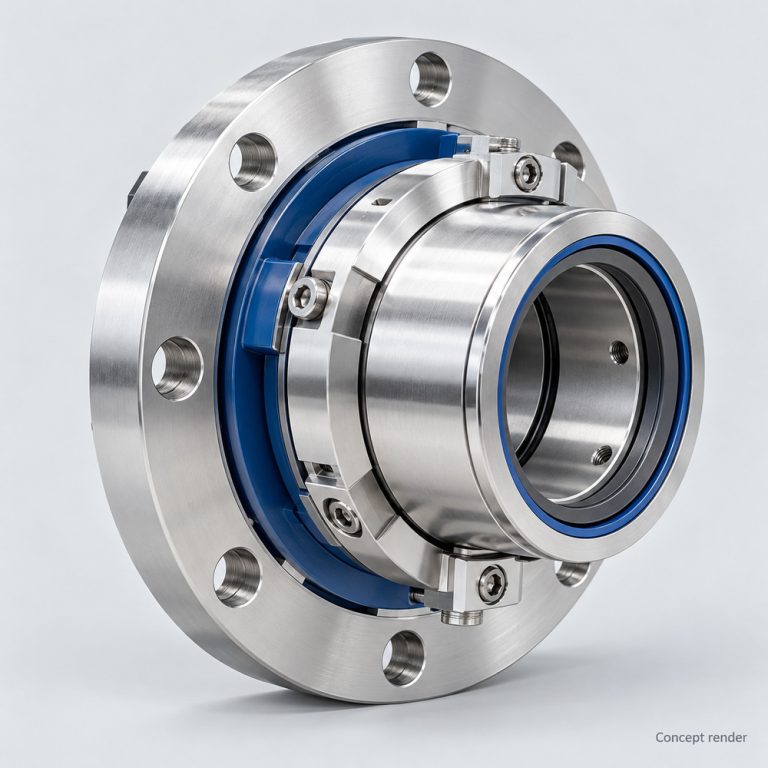 Cartridge SealsA cartridge seal is a complete mechanical seal assembled by the manufacturer on a sleeve and gland plate,…View
 Component Mechanical SealsComponent mechanical seals are supplied as separate parts, not as a factory-assembled cartridge. The fitter sets the working…View
 Mechanical Seal Replacement and IdentificationPlenty of seals arrive with no nameplate, a worn marking or an unknown manufacturer. Globseals helps customers identify…View
- Common Causes of Seal FailureSeals rarely fail without a reason. Looking carefully at how a seal failed usually points to a cause…View
 Find My SealIf you do not have a part number, dimensions are the next best route. Tell us the type…View
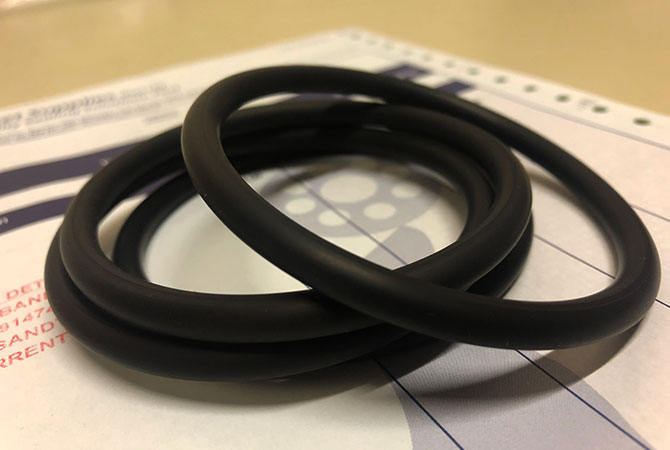 How to Measure an O-ringAn O-ring is defined by two dimensions and a material. Get the inside diameter and cross-section right, note…View
 How to Measure a Hydraulic SealHydraulic seals are normally specified by groove dimensions, because the seal must fit a particular housing. This guide…View
Send your pump and seal details for identification.
Send your brief, quantities and deadline. We reply with a clear written quote and confirm the turnaround before anything goes to production.
