
Chemical-resistant sealing
PTFE Gaskets and Seals
PTFE is chosen where chemical resistance matters more than elasticity. It is used for gaskets, envelope gaskets, joint sealant tape, lip seals, backup rings, V-packing and bushes. Because the many PTFE grades behave differently, selecting the right one is the main task. Globseals can help you choose between virgin, filled, expanded and modified PTFE and quote the parts you need.
- Virgin, filled and expanded PTFE
- Gaskets, envelopes, seals
- Wide chemical resistance
- Creep and cold flow explained
Overview
PTFE resists most acids, alkalis and solvents and has a very low friction coefficient. Its weaknesses are cold flow (creep) under sustained load, low elasticity, and poor recovery after compression. Good PTFE sealing practice works around those traits through filled grades, geometry such as envelopes, and correct bolt loading with re-torque where advised.
This page covers PTFE as a gasket and seal material. For the sheet and rod stock itself, see gasket sheets and materials. Values here are typical only; always confirm against the manufacturer's data for your application.
Product types
- Virgin PTFE sheet gaskets: cut from skived or moulded sheet for chemical service on flanges.
- Filled PTFE gaskets: glass, carbon, graphite, mineral or barium sulphate fillers that reduce creep and improve strength.
- Expanded PTFE (ePTFE): soft sheet or joint sealant tape that conforms to uneven or fragile flanges such as glass-lined or plastic.
- Envelope gaskets: a PTFE shell around a compressible core of fibre, rubber or metal; low cost for corrosive duty.
- PTFE seals: rotary lip seals, spring-energised seals, backup rings, V-packing sets and piston rings.
- Modified PTFE (TFM): improved creep and weldability for demanding gaskets.
PTFE grades and honest notes
| Grade | Advantage | Watch for |
|---|---|---|
| Virgin | Highest chemical resistance, clean | Creeps most; low strength |
| Glass-filled | Better creep resistance | Hydrofluoric acid and strong alkalis can attack glass |
| Carbon or graphite-filled | Good wear and thermal conductivity | Not suited where contamination by filler is unacceptable |
| Mineral-filled | Stable under bolt load | Check chemical compatibility with the filler |
| Expanded | Conforms to rough faces | Needs correct width and thickness for the load |
PTFE is usually rated for continuous use up to roughly 260 °C, though pressure capability drops as temperature rises. It is attacked by molten alkali metals and some fluorine compounds. Always confirm against the manufacturer's data for your application. See the PTFE and graphite sealing guide.
How to choose PTFE gaskets and seals
- Name the chemical, concentration and temperature.
- Decide whether creep is an issue: high bolt loads or long service periods favour filled or modified grades.
- For fragile or rough flanges (glass-lined, plastic, FRP), consider expanded PTFE.
- For dynamic seals, state the shaft or rod size, speed and pressure; unfilled PTFE can wear quickly against a rough surface.
- Think about contamination limits. Food, pharma and potable-water applications require technical review and the correct certification documents.
Information to send with your enquiry
The more of the following you can supply, the faster the part can be identified and quoted.
- Chemical and concentration
- Temperature range and operating pressure
- Flange standard and dimensions, or seal drawing/part number
- Static or dynamic duty; speed and surface finish if dynamic
- Grade preference (virgin, filled, expanded, TFM)
- Whether food-contact, pharmaceutical or potable certification is needed
- Quantity and photos of the old part
Genuine and compatible replacements
Customers can enquire about genuine or compatible replacement parts for equipment from manufacturers such as Burgmann, John Crane, Chesterton, Grundfos, KSB, Flygt, Lowara, Goulds, Sulzer, Flowserve, Klinger, Flexitallic, Trelleborg and others. A genuine part is supplied by or made to the original equipment manufacturer's specification and part number. A compatible part is made to fit the same dimensions and duty, usually by another manufacturer, and may differ in material or finish. Compatible PTFE parts can look identical but differ in fill, density and creep behaviour. Specify the grade if you know it, or send the old part. State clearly in your enquiry which you want, and say whether a part number or sample is available.
How to buy
Globseals supports three ways to buy, and the right one depends on how well the part is defined.
- Buy online where a product listing shows a confirmed price. Products are being added to the shop progressively, so not every item in this category is listed yet.
- Request a quote for custom, bulk or unpriced items. Gaskets cut to size, envelope sets and special PTFE seals are quoted. Use the quote request page.
- Technical review when identification is unresolved. Examples include unknown media, regulated applications and heavy-duty dynamic seals. Start with Find My Seal or upload a drawing.
You can also phone 011 079 6033 or WhatsApp 079 508 0989, or email info@globseals.com. See delivery and collection for how orders are handled; courier costs are quoted per order.
Options & specifications
| Profiles available | Sheet gaskets, envelopes, ePTFE tape, lip seals, V-packing, backup rings |
|---|---|
| Common grades | Virgin, glass-filled, carbon-filled, mineral-filled, expanded, TFM |
| Typical limits | Roughly 260 °C continuous; confirm for your grade |
| Main weakness | Creep and cold flow |
| Typical use | Chemical flanges, lined pipe, process equipment |
| Order mode | Quote; technical review for regulated duty |
Options, materials and turnaround are confirmed on your written quote.
How ordering works
- 1
Identify
Gather part number, dimensions or a photo of the part.
- 2
Send
Submit it through the quote form, WhatsApp or email.
- 3
Review
Our team checks the details and asks about any gaps.
- 4
Order
Confirm the quote or buy online where a price is listed.
Frequently asked questions
Why does a PTFE gasket leak after a few weeks?
Cold flow reduces the gasket thickness and load over time. Filled or modified grades, an envelope with a core, and re-torque after the first heat cycle can help.
Is PTFE suitable for every chemical?
No. It resists most, but molten alkali metals and some fluorine agents attack it, and fillers may be less resistant than the base polymer.
What is the difference between PTFE and expanded PTFE?
Expanded PTFE has a porous fibrillated structure, so it is soft and conformable, while virgin PTFE is dense and stiff.
Can PTFE gaskets be used on glass-lined equipment?
Expanded PTFE and envelope gaskets are commonly used because they seal at low bolt load. Confirm the equipment maker's recommendation.
Do you supply food-grade PTFE?
Food-contact applications require technical review and the correct certification documents before supply can be confirmed.
Request a quote for PTFE Gaskets and Seals
Related services
 Gasket Sheets and MaterialsGasket sheet is flat material sold in sheets, rolls or cut pieces, from which gaskets are cut for…View
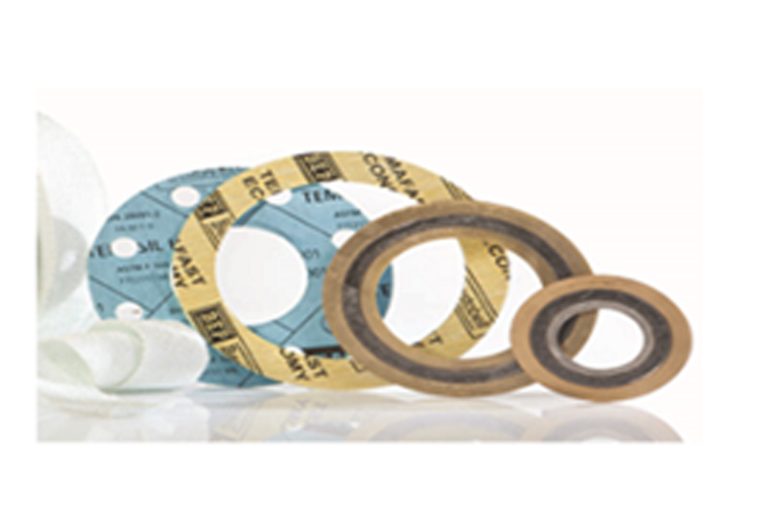 Ring and Full-face GasketsFlat flange gaskets come in two basic layouts: a ring gasket that sits inside the bolt circle, and…View
 Rotary Shaft and Oil SealsRotary shaft seals, commonly called oil seals, keep lubricant in and contaminants out where a rotating shaft passes…View
- Backup RingsA backup ring is a hard, thin ring fitted beside an O-ring or lip seal on the low-pressure…View
 PTFE and Graphite Sealing GuidePTFE and flexible graphite are two of the most widely used non-elastomer sealing materials. Both resist a wide…View
 Request a QuoteUse this page for custom, bulk or unpriced items, or whenever you want a written quotation. A good…View
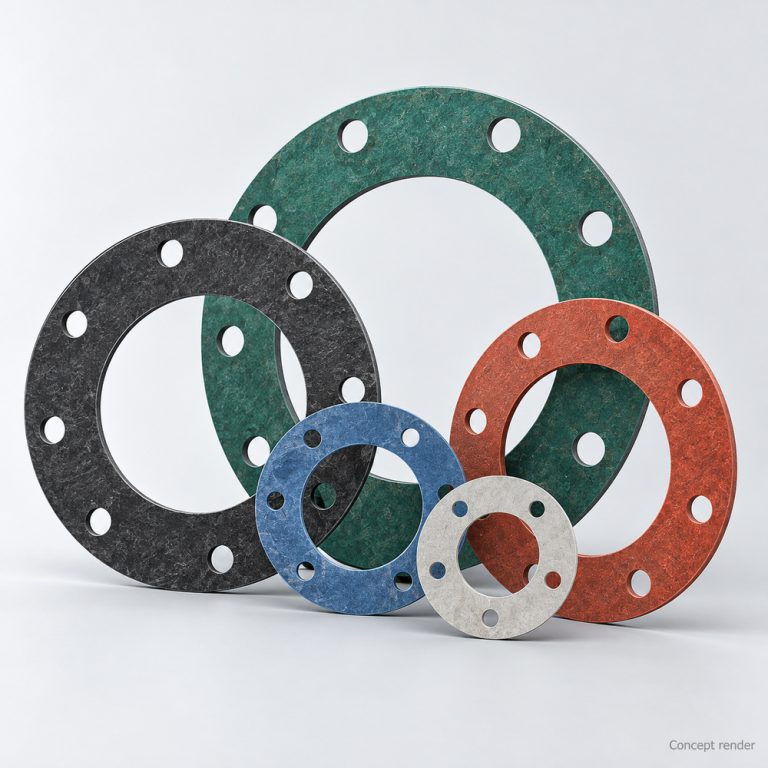 Cut and Custom GasketsMany gaskets are not available off the shelf: obsolete equipment, imported machines, non-standard flanges or special shapes. Cut…View
 Spiral Wound GasketsSpiral wound gaskets seal pipe flanges where pressure, temperature cycling or aggressive media rule out a plain sheet…View
Send the chemical and flange details for a PTFE gasket quote.
Send your brief, quantities and deadline. We reply with a clear written quote and confirm the turnaround before anything goes to production.
