
Maintenance guide
Pump and Seal Maintenance Guide
Good maintenance extends seal life and reduces unplanned stops. This guide offers a general routine for pumps and their seals, covering inspection, installation care and spares planning. It is a starting point; always follow the pump and seal manufacturer's instructions.
- Inspect
- Install with care
- Plan spares
- Keep records
Routine checks
- Leakage: observe the seal area for drips, spray or deposits. Some mechanical seals show slight vapour or film leakage; know what is normal for your seal type.
- Noise and vibration: bearing noise, cavitation sound and vibration shorten seal life.
- Temperature: check the bearing housing and seal area for unusual heat.
- Flush and support systems: check flows, levels, pressure and filters in flush plans, barrier pots and coolers.
- Gland packing: check for appropriate leakage that cools and lubricates the packing, and adjust gradually.
- Baseplate, coupling and guarding: look for looseness and wear.
Start-up practice
- Confirm the pump is primed and vented so the seal is not run dry.
- Open flush, quench or cooling lines before starting.
- Check rotation direction.
- Start, then watch for leakage, noise and heat.
- Record baseline readings for future comparison.
Installation care
- Check the shaft or sleeve for scoring, runout and burrs; repair or replace if needed. See shaft repair sleeves.
- Check the stuffing box face and bore for damage and squareness.
- Keep seal faces and O-rings clean; handle faces only by edges, and avoid fingerprints and dust.
- Use only lubricants that are compatible with the elastomers, as some oils and greases attack rubber.
- Use assembly sleeves or tapers to avoid cutting elastomers over keyways or threads.
- Set the seal to the manufacturer's instructions, such as the setting clips on cartridge seals, and remove clips afterwards as directed.
- Tighten gland nuts evenly.
Compression packing
Pack the box with correctly cut rings, staggering joints, seating each ring individually, then adjust the gland gradually once running. Do not over-tighten, since packing needs a small controlled leak to avoid heat and shaft wear. See compression packing.
Spares planning
Keep a list of critical pumps, with seal type, size, materials and part numbers. Identify which spares have long supply chains and which are routinely used. For recurring needs, ask about inventory management and supply agreements, or planned maintenance and reliability support. Keep spares clean, flat and away from sunlight and ozone sources; elastomers have a shelf life that depends on the compound and storage conditions.
Signs that action is needed
- Leakage rising over several days.
- Smoke, burning smell or hot seal area.
- Squealing or grinding noise.
- Product in the bearing oil, or oil milky or darkened.
- Frequent seal replacements on the same pump. See causes of seal failure.
Repair and refurbishment
Worn pumps, seal faces and shafts may be repairable. See pump repairs and refurbishment and mechanical seal repairs for what we do and what we need from you; capability is confirmed when you enquire. For pumps and spares, see pumps and pump spares.
Limitations
- This is general guidance, not a replacement for the manufacturer's manual.
- Intervals depend on the duty and cannot be given generically.
- Hazardous, high-pressure or specialist duties need specific procedures and technical review.
- Follow site safety rules, lock-out procedures and local regulations when working on equipment.
Options & specifications
| Covers | Inspection, installation, packing, spares |
|---|
Options, materials and turnaround are confirmed on your written quote.
How ordering works
- 1
Inspect
Leakage, noise, heat.
- 2
Start safely
Prime, vent, open flush.
- 3
Install carefully
Clean, lubricate, set.
- 4
Record
Keep a history.
Frequently asked questions
How often should seals be inspected?
There is no universal interval. Base it on duty, criticality and the manufacturer's advice.
Can I run a pump dry briefly?
Most mechanical seals rely on a fluid film, and dry running can damage them quickly. Follow the seal manufacturer's instructions.
Should I replace the seal whenever the pump is opened?
Often it is sensible, but the condition and criticality should guide the decision.
Do you offer training?
See our seal installation and maintenance training service; availability is confirmed per enquiry.
Explore
 Pumps and Pump SparesGlobseals supplies pump spares and, on enquiry, pumps for water, process and general industrial duty. Pump spares are…View
 Compression PackingCompression packing, or gland packing, is a braided rope or ring placed in a stuffing box and squeezed…View
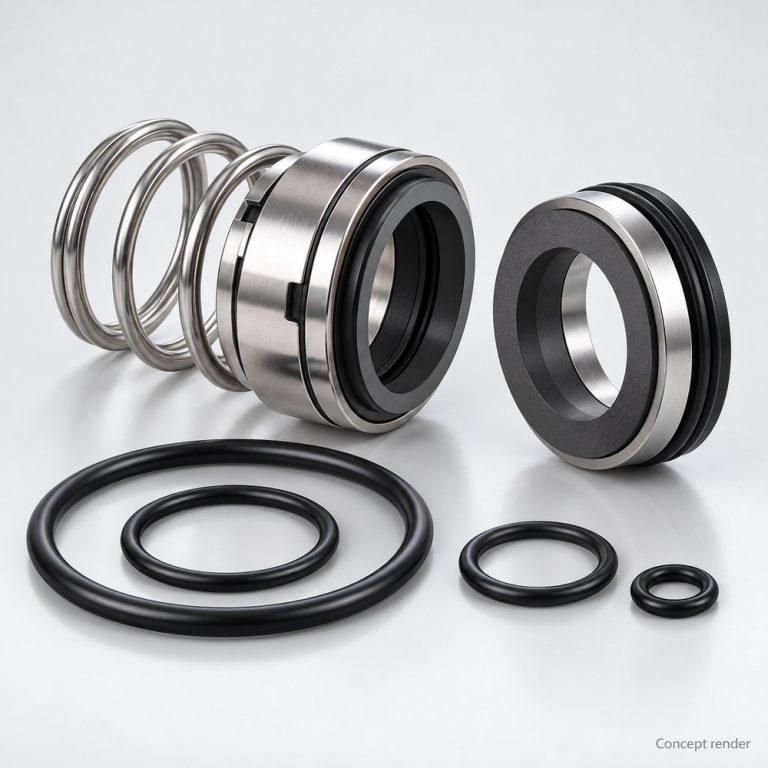 Mechanical Seal RepairsA leaking mechanical seal does not always need a full replacement. Depending on the design and the damage,…View
- Pump Repairs and RefurbishmentPumps are the heart of many plants, and a failed pump quickly becomes a production problem. Globseals supports…View
- Planned Maintenance and Reliability SupportReliability starts with knowing which components fail, why, and what to hold ready. Globseals can discuss planned maintenance…View
 Seal Installation and Maintenance TrainingMany seal failures begin on the day of installation: a scratched face, a twisted O-ring or a rushed…View
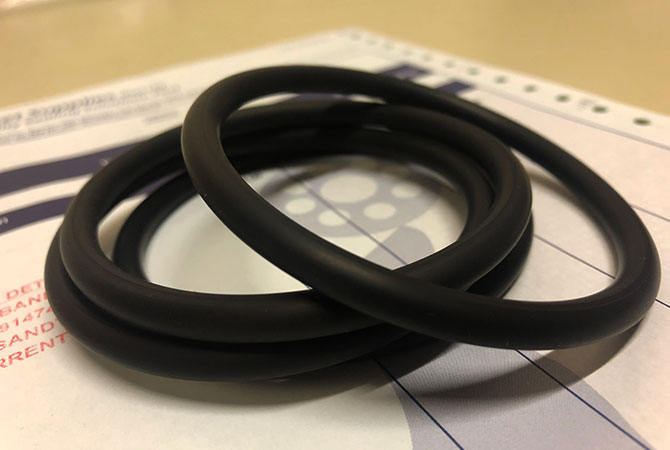 How to Measure an O-ringAn O-ring is defined by two dimensions and a material. Get the inside diameter and cross-section right, note…View
 How to Measure a Hydraulic SealHydraulic seals are normally specified by groove dimensions, because the seal must fit a particular housing. This guide…View
Ask about spares planning and pump support.
Send your brief, quantities and deadline. We reply with a clear written quote and confirm the turnaround before anything goes to production.
