
Mechanical seals
Mechanical Seals for Pumps and Rotating Equipment
A mechanical seal controls leakage where a rotating shaft passes through a stationary housing, most often on centrifugal pumps, but also on mixers, agitators, compressors and gearboxes. Two precisely flat faces, one rotating and one stationary, are held together by spring force and fluid pressure, with a very thin film between them. Globseals supplies mechanical seals and seal spares to customers across Africa, and this page is the starting point for working out what you need and how to order it.
- Single, double and balanced designs
- Shaft-size and make based lookup
- Genuine or compatible replacements
- Quote and technical review available

Overview
Unlike packing, which relies on a compressed soft material bearing on the shaft, a mechanical seal leaks through a controlled microscopic gap between hard faces. This usually means lower leakage, less shaft wear and lower power loss, provided the seal is selected and fitted correctly and the pump is run within its design conditions.
Every mechanical seal has four functional groups: the primary faces (rotating and stationary), the secondary seals (O-rings, V-rings, PTFE wedges or bellows that seal behind the faces), the springs or bellows that supply closing force, and the drive and housing parts (collars, set screws, glands, sleeves). Replacing a seal usually means replacing the faces and secondary seals together, because worn faces will not bed in properly against new partners.
This category covers complete seals for a given shaft size and pump model. For factory-assembled units that bolt in as a single piece, see our Cartridge Seals page. For loose parts, see Component Mechanical Seals.
Mechanical seal types and designs
Single and double seals
A single seal has one set of faces and relies on the pumped liquid, or a flush, to lubricate and cool them. A double seal has two sets of faces with a barrier or buffer fluid between them, which isolates the process fluid from atmosphere. Double arrangements are typically considered for hazardous, toxic, abrasive or crystallising liquids, and need a supply system (see Seal Support and Supply Systems).
Unbalanced and balanced seals
In an unbalanced seal the full hydraulic pressure acts on the faces. A balanced seal reduces the closing load from that pressure, so it generally suits higher pressures and reduces heat generation. Which one applies depends on the seal geometry and the manufacturer's published balance ratio, not on appearance.
Pusher and non-pusher seals
Pusher seals have a secondary seal that slides along the shaft or sleeve to follow face wear. Non-pusher designs use a metal or elastomer bellows so no secondary seal has to slide, which can help with fouling or sticky products.
Conical spring, multi-spring and wave spring
Single conical spring seals (common on general pump duty) are compact but sensitive to clogging with solids. Multi-spring designs spread the load and tolerate shaft speed better. Wave spring and metal bellows seals suit tight axial space.
Elastomer bellows and metal bellows
Rubber bellows seals are widely used on clean-water and general-service pumps. Welded or formed metal bellows are chosen where temperatures, chemistry or fouling make elastomer or pusher designs unsuitable.
Standardised dimension seals
Many seals follow dimensional standards such as EN 12756 (formerly DIN 24960) for the face and housing envelope, which helps cross-referencing between manufacturers. Pump-specific OEM designs do not always follow a standard, so confirm dimensions rather than assuming.
Face and secondary seal materials
Material choice is driven by the liquid, temperature, pressure, speed and the presence of solids. The notes below are typical and general. Always confirm against the manufacturer's data for your application.
- Carbon-graphite: a very common soft face. Self-lubricating and tolerant of brief dry running. Resin-impregnated and antimony-impregnated grades differ in chemical compatibility and strength.
- Silicon carbide: a hard, thermally conductive ceramic. Often used as the hard partner and for abrasive or hot service, and as hard-on-hard pairs where solids are present. Brittle, so it needs careful handling.
- Tungsten carbide: tough and shock-resistant, widely used as a hard face against carbon or for heavier duty. Binder choice (nickel or cobalt) affects chemical resistance.
- Alumina ceramic: an economical hard face for general water service. Less thermal shock resistance than silicon carbide.
- Elastomers (NBR, EPDM, FKM, perfluoroelastomer): chosen mainly by fluid compatibility. EPDM is typical for water and some chemicals but not mineral oils. FKM suits many oils and fuels but not hot water or steam in many grades. See our elastomer comparison.
- Metal parts: stainless steel (316 or 304 grades) is typical. Higher alloys are used for aggressive chemistry. Springs may need a different alloy from the case.
How to choose a mechanical seal
Start with the equipment and work towards the seal, rather than the other way round.
- Identify the pump or machine and note the manufacturer, model and serial or build number. This often leads straight to the correct seal part number.
- Measure the shaft or sleeve diameter at the seal seat, and the stuffing box or seal chamber bore and depth.
- Establish the operating conditions: the liquid and its concentration, temperature, suction and discharge pressure, speed, and whether it contains solids or crystallises.
- Check the rotation and fitting space: some springs are direction-specific, and installed length (the working length of the seal) must match the chamber.
- Decide on the arrangement: single, double, with or without flush, quench or barrier supply.
Hazardous, toxic, oxygen, hydrogen, food-contact, pharmaceutical or potable-water duties require technical review and the correct certification documents for the materials used.
Information to send us
- Pump or equipment make and model, plus any nameplate data
- Existing seal part number or markings, if visible
- Shaft or sleeve diameter and seal chamber dimensions
- Liquid, concentration, temperature and pressure
- Shaft speed and direction of rotation
- Photos of the old seal, the shaft and the seal chamber
- Quantity required and whether it is a one-off or repeat order
Genuine and compatible replacements
A genuine seal is supplied by the original equipment manufacturer or the seal brand named on the pump. A compatible seal is made by another manufacturer to fit the same shaft size and envelope, often designed to interchange with a named OEM seal. Compatible parts can be a practical choice when dimensions, materials and duty match, but fit is only one factor, and face and elastomer materials still need to suit the liquid.
Customers can enquire about genuine or compatible replacement parts for equipment from manufacturers such as Burgmann, John Crane, Chesterton, Flowserve, Grundfos, KSB, Flygt, Lowara, Goulds and Sulzer. Tell us which you prefer and we will quote accordingly.
How to buy
Mechanical seals are often fitted to critical equipment, so the right route depends on how confident the identification is.
- Buy online: where a product is listed in the online shop with a confirmed price, you can order directly. Products are being added to the shop progressively, so not every item will be listed yet.
- Request a quote: for custom, bulk, unpriced or repeat-order requirements, send us a quote request with your details.
- Technical review: if you cannot identify the part, or the application is demanding, use Find My Seal or upload a drawing and our team will review it with you.
You can also call head office in Johannesburg on 011 079 6033, or WhatsApp 079 508 0989, or email info@globseals.com.
Options & specifications
| Seal arrangements | Single, double (back to back, face to face or tandem), with or without flush |
|---|---|
| Face designs | Balanced and unbalanced; pusher and non-pusher; spring or bellows loaded |
| Common face materials | Carbon, silicon carbide, tungsten carbide, alumina ceramic |
| Common secondary seals | NBR, EPDM, FKM, PTFE, perfluoroelastomer, graphite |
| Typical applications | Centrifugal pumps, mixers, agitators, compressors, gearboxes |
| Size reference | Shaft or sleeve diameter plus installed length and chamber details |
Options, materials and turnaround are confirmed on your written quote.
How ordering works
- 1
Identify the equipment
Note the pump make, model and any seal marking on the old unit.
- 2
Measure the shaft and chamber
Record shaft diameter, chamber bore and depth, and installed length.
- 3
Describe the duty
Send liquid, temperature, pressure and speed.
- 4
Choose how to order
Buy online, request a quote, or ask for technical review.
Frequently asked questions
How do I know which mechanical seal fits my pump?
The pump make and model usually lead to the correct seal, but variations exist between pump generations. Send us the model, shaft diameter and photos of the old seal, and we will help identify it. If the part number is not clear, ask for a technical review.
What is the difference between a mechanical seal and gland packing?
Packing is a compressible material pressed around the shaft and tightened with a gland follower, and it relies on a small controlled leak for cooling. A mechanical seal uses two flat faces and typically leaks far less, but costs more and needs correct fitting. See our compression packing page for the alternative.
Can I replace only the faces?
Faces and secondary seals are normally replaced together, because used faces may not mate cleanly with a new partner. Loose parts are covered on the component mechanical seals page.
Why do mechanical seals fail early?
Common causes include dry running, wrong materials for the liquid, misalignment, shaft deflection, contaminated flush and fitting damage. Our seal failure guide explains how to read the signs.
Do you supply seals for pumps made by other brands?
You can enquire about genuine or compatible mechanical seals for pumps from many manufacturers. Availability and supply route are confirmed when you enquire.
Request a quote for Mechanical Seals
Related services
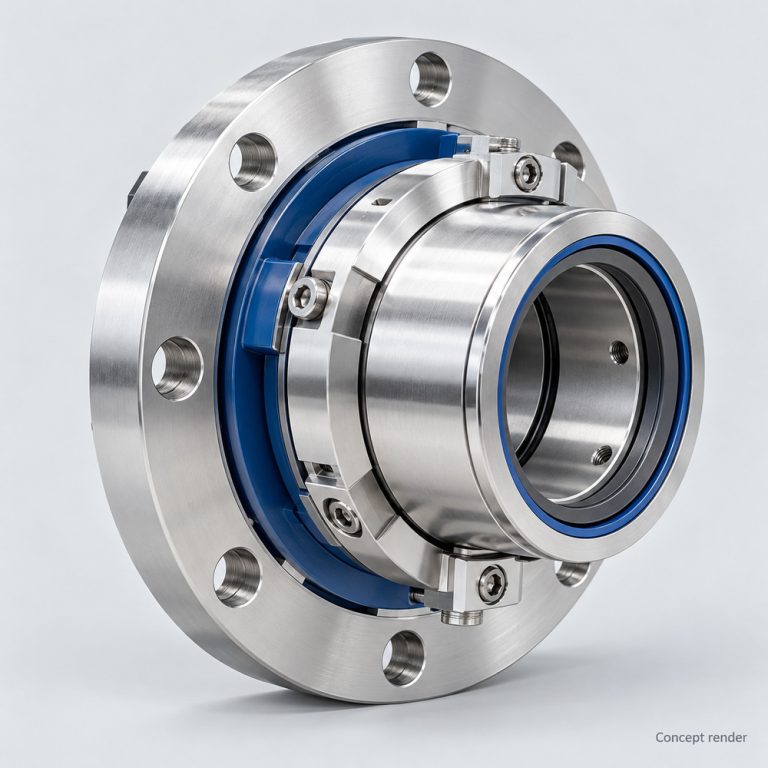 Cartridge SealsA cartridge seal is a complete mechanical seal assembled by the manufacturer on a sleeve and gland plate,…View
 Component Mechanical SealsComponent mechanical seals are supplied as separate parts, not as a factory-assembled cartridge. The fitter sets the working…View
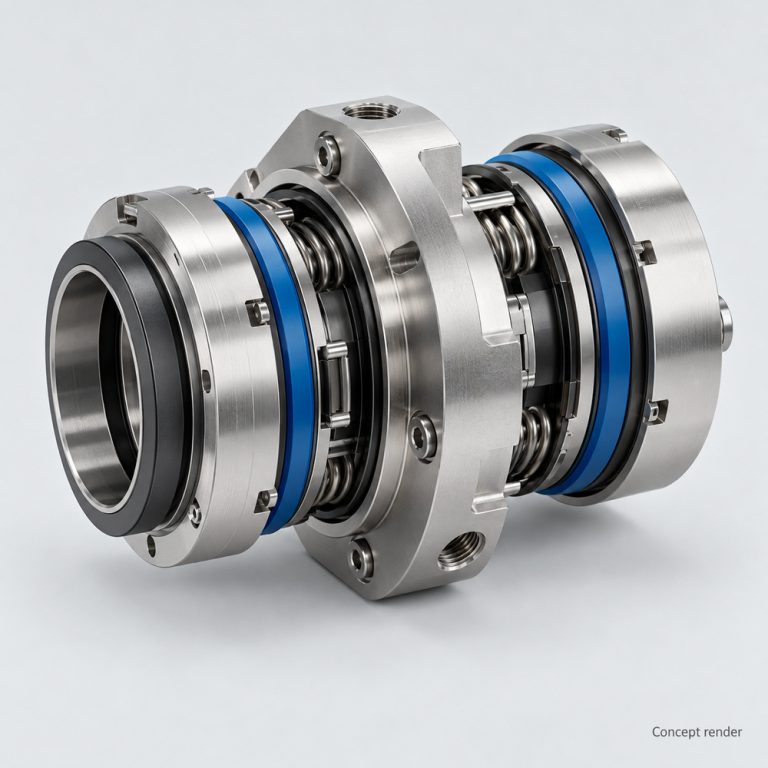 Seal Support and Supply SystemsA mechanical seal does not work alone. It depends on the environment around it: cool, clean liquid at…View
 Mechanical Seal Replacement and IdentificationPlenty of seals arrive with no nameplate, a worn marking or an unknown manufacturer. Globseals helps customers identify…View
 Pumps and Pump SparesGlobseals supplies pump spares and, on enquiry, pumps for water, process and general industrial duty. Pump spares are…View
- Carbon Floating Ring SealsCarbon floating ring seals are non-contacting or lightly contacting restriction seals used on turbines, compressors, blowers and some…View
 Hydraulic SealsHydraulic seals contain pressurised oil in cylinders, rams, presses and valves while keeping dirt out and controlling friction.…View
 Pneumatic SealsPneumatic seals work in compressed-air systems, where the medium is a gas, pressures are lower than in hydraulics…View
Send the pump model and shaft size and we will help you find the right mechanical seal.
Send your brief, quantities and deadline. We reply with a clear written quote and confirm the turnaround before anything goes to production.
