
Gasket sheet
Gasket Sheets and Jointing Materials
Gasket sheet is flat material sold in sheets, rolls or cut pieces, from which gaskets are cut for flanges, covers, pumps, heat exchangers, engines and many other joints. The right sheet depends on the fluid, temperature, pressure, flange condition and bolt load. Globseals can help you choose a gasket sheet material and thickness, supply sheets or offcuts, and arrange cutting. This category covers asbestos-free materials.
- Compressed fibre, PTFE and graphite
- Rubber, cork and mica sheet
- Choose by media and temperature
- Sheets, cut pieces or finished gaskets

Overview
A gasket seals by being compressed between two faces so that it fills the surface irregularities and resists the internal pressure, which tries to blow it out. Too soft a material may squeeze out or creep and lose load. Too hard a material may not conform to a rough flange. Thickness matters as well, since thin gaskets generally seal better and resist blow-out more than thick ones, provided the flange is flat enough.
Gasket sheet is the raw material. If you want finished parts, see Cut and Custom Gaskets and our Gasket Cutting and Material Conversion service. For wound or metal-reinforced types, see Spiral Wound Gaskets. For standard flange shapes, see Ring and Full-face Gaskets. For PTFE-specific products, see PTFE Gaskets and Seals, and for graphite, Graphite Gaskets and Packing.
Gasket sheet families
Compressed non-asbestos fibre sheet
Aramid, glass, mineral or cellulose fibres bound with rubber such as NBR, and compressed. A general-purpose sheet for water, steam (in suitable grades), oils and many chemicals. The fibre type and binder define performance.
PTFE sheet (virgin, filled, expanded and modified)
Broad chemical resistance. Filled and modified PTFE resist creep better than virgin PTFE. Expanded PTFE is soft and conforms to uneven flanges such as glass-lined or plastic flanges.
Flexible graphite sheet
Excellent temperature capability and chemical resistance. Plain graphite sheet is soft and fragile, so it is often reinforced with a metal insert or tanged plate for handling and blow-out resistance.
Rubber sheet (NBR, EPDM, neoprene, SBR, FKM, silicone)
Soft sheet for low-pressure flanges, covers and lids. Compound selection follows the fluid. Often with fabric insertion for strength.
Cork and cork-rubber sheet
For low-pressure oil and fuel joints on engines and gearboxes, where the flange is thin or irregular.
Mica and ceramic fibre sheet
For high-temperature exhausts, furnaces and ovens, usually low-pressure and not for fluid containment in demanding service.
Vegetable fibre and paper sheet
Lower-cost sheet for oils, fuels and water at low pressure.
Choosing the material by media and temperature
The notes below are typical and general. Temperature, pressure and fluid limits vary widely by manufacturer and grade. Always confirm against the manufacturer's data for your application.
- Water, glycol and general service: compressed fibre, rubber sheet or expanded PTFE, depending on pressure and flange.
- Mineral oils and fuels: NBR-bound fibre, NBR rubber, cork-rubber or PTFE. Avoid EPDM-based sheet with oils.
- Steam: only in grades designed for it. Graphite or high-quality fibre grades are typical choices, and steam duty needs correct selection for temperature and pressure.
- Aggressive chemicals: PTFE or modified PTFE are typical, with careful selection for strong oxidisers and hot alkalis.
- High temperature: graphite, mica or ceramic fibre, depending on the atmosphere and pressure.
- Regulated duties: oxygen, hydrogen, food-contact, pharmaceutical, potable water and aerospace duties require technical review and the correct certification documents.
How to select gasket sheet
- Define the medium and temperature, including cleaning chemicals and upset conditions.
- Define the pressure and flange type, including flange material, face finish and bolt load. Our gasket dimensions and flange guide explains the details.
- Choose the thinnest suitable thickness. Typical sheet thicknesses range from about 0.5 mm to 3 mm or more, but thin gaskets need flat, well-finished flanges.
- Check the bolt load available. PTFE needs enough stress to seat, and soft rubber needs very little.
- Check chemical compatibility of the binder as well as the fibre.
- Plan for cutting. Specify the sheet size, number of gaskets and any special shape.
See also the gasket material selection guide.
Information to send us
- Fluid or gas, concentration and temperature
- Operating pressure, and whether pressure is cyclic
- Flange standard, size and face type, or a drawing/template
- Preferred material and thickness, if known
- Sheet size or number of gaskets needed
- Equipment make and model, if relevant
- Any compliance documents required
Genuine and compatible replacements
Genuine gasket sheet comes from the original material manufacturer, such as Klinger, Flexitallic or Trelleborg, under a brand and grade name. Compatible sheet is made by other manufacturers to similar specifications, and may be offered as an equivalent to a named grade. Equivalence is not automatic. Fibre type, binder, density and surface treatment change performance, so compare data sheets rather than assuming equivalence, particularly for steam and chemical duty.
Customers can enquire about genuine or compatible sheet for use with equipment from manufacturers such as Klinger, Flexitallic, Trelleborg and Vulcan.
How to buy
Standard sheets can suit online ordering where listed, while sheets cut to shape are quoted.
- Buy online: where a product is listed in the online shop with a confirmed price, you can order directly. Products are being added to the shop progressively, so not every item will be listed yet.
- Request a quote: for custom, bulk, unpriced or repeat-order requirements, send us a quote request with your details.
- Technical review: if you cannot identify the part, or the application is demanding, use Find My Seal or upload a drawing and our team will review it with you.
You can also call head office in Johannesburg on 011 079 6033, or WhatsApp 079 508 0989, or email info@globseals.com.
Options & specifications
| Sheet families | Compressed fibre, PTFE, graphite, rubber, cork, mica, ceramic fibre |
|---|---|
| Typical thicknesses | About 0.5 mm to 3 mm or more, depending on material |
| Supplied as | Full sheets, cut sheets, rolls, strips or cut gaskets |
| Selection factors | Medium, temperature, pressure, flange finish, bolt load |
| Standards reference | Flange standards such as EN 1092-1, ASME B16.5 and SABS 1123 |
| Asbestos | Asbestos-free materials only |
Options, materials and turnaround are confirmed on your written quote.
How ordering works
- 1
Define the medium
State fluid, temperature and pressure.
- 2
Identify the flange
Standard, size, face type or drawing.
- 3
Select material and thickness
Agree the sheet with our team.
- 4
Quote or order
Buy listed sheets or request a quote for cutting.
Frequently asked questions
What thickness of gasket sheet should I use?
Use the thinnest thickness that fills the flange irregularities and suits the bolt load. Thin gaskets resist blow-out better, but need flat, well-finished flanges. Confirm against the manufacturer's data.
Can I use one sheet material for everything?
No. Fluid, temperature and pressure vary too widely. A general-purpose fibre sheet may work for water and oils, but chemicals, steam and high temperatures need specific grades.
What is non-asbestos fibre sheet?
It is a compressed sheet using aramid, glass or mineral fibres with a rubber binder in place of asbestos. Performance depends on the fibre and binder, so check the grade.
Can I buy sheet by the metre or as offcuts?
Send your required size and quantity for a quote. Availability of sheet formats is confirmed when you enquire.
Do you cut the gaskets for me?
Yes, cutting from sheet is covered under cut and custom gaskets and gasket cutting and material conversion, with capability confirmed when you enquire.
Request a quote for Gasket Sheets and Materials
Related services
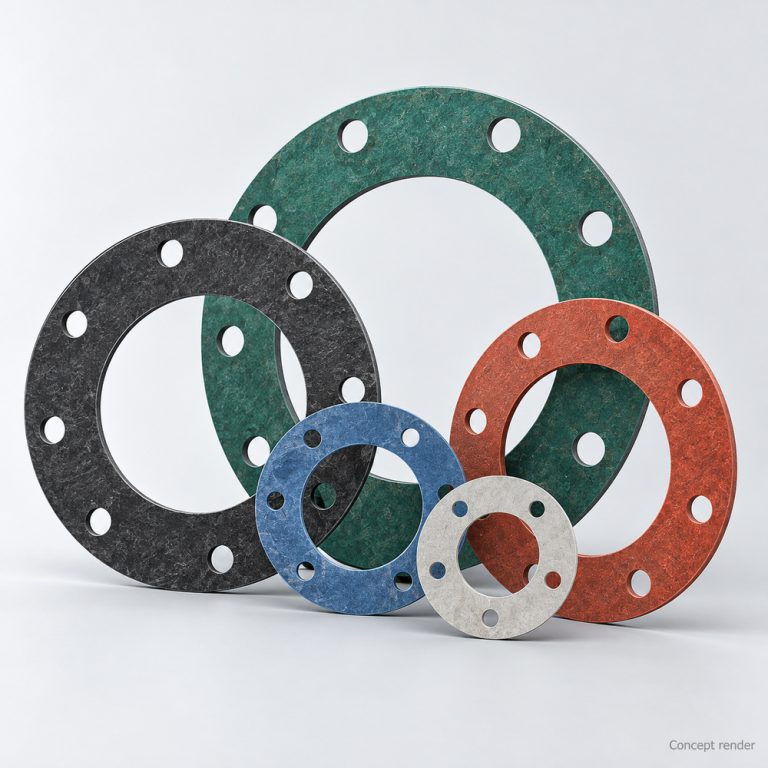 Cut and Custom GasketsMany gaskets are not available off the shelf: obsolete equipment, imported machines, non-standard flanges or special shapes. Cut…View
- PTFE Gaskets and SealsPTFE is chosen where chemical resistance matters more than elasticity. It is used for gaskets, envelope gaskets, joint…View
 Graphite Gaskets and PackingFlexible graphite is the standard answer for high-temperature joints in steam, thermal oil and hot process lines, and…View
 Rubber Gaskets and Elastomer ProductsRubber gaskets and elastomer parts cover a broad range: flat gaskets cut from sheet, strip and cord, moulded…View
 Gasket Cutting and Material ConversionMany maintenance teams buy sheet material and need it turned into usable parts: gaskets, washers, discs, strips and…View
 Spiral Wound GasketsSpiral wound gaskets seal pipe flanges where pressure, temperature cycling or aggressive media rule out a plain sheet…View
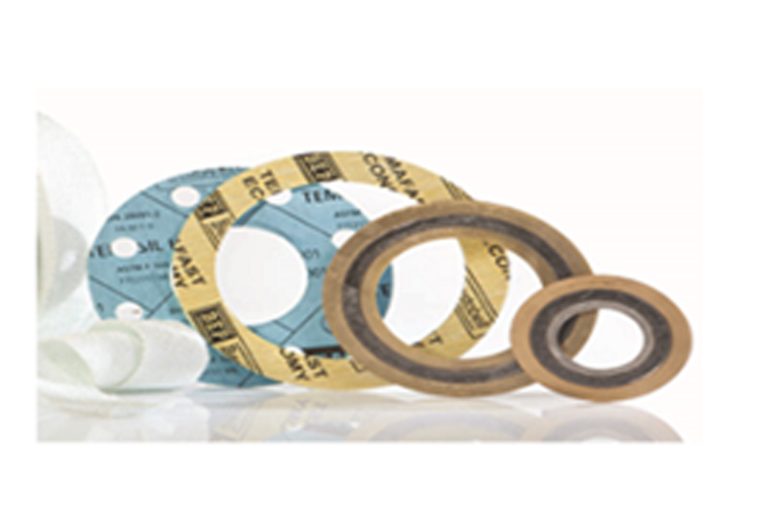 Ring and Full-face GasketsFlat flange gaskets come in two basic layouts: a ring gasket that sits inside the bolt circle, and…View
 Compression PackingCompression packing, or gland packing, is a braided rope or ring placed in a stuffing box and squeezed…View
Tell us the medium, temperature and flange and we will help you choose the right gasket sheet.
Send your brief, quantities and deadline. We reply with a clear written quote and confirm the turnaround before anything goes to production.
