
Elastomer sealing
Rubber Gaskets and Elastomer Products
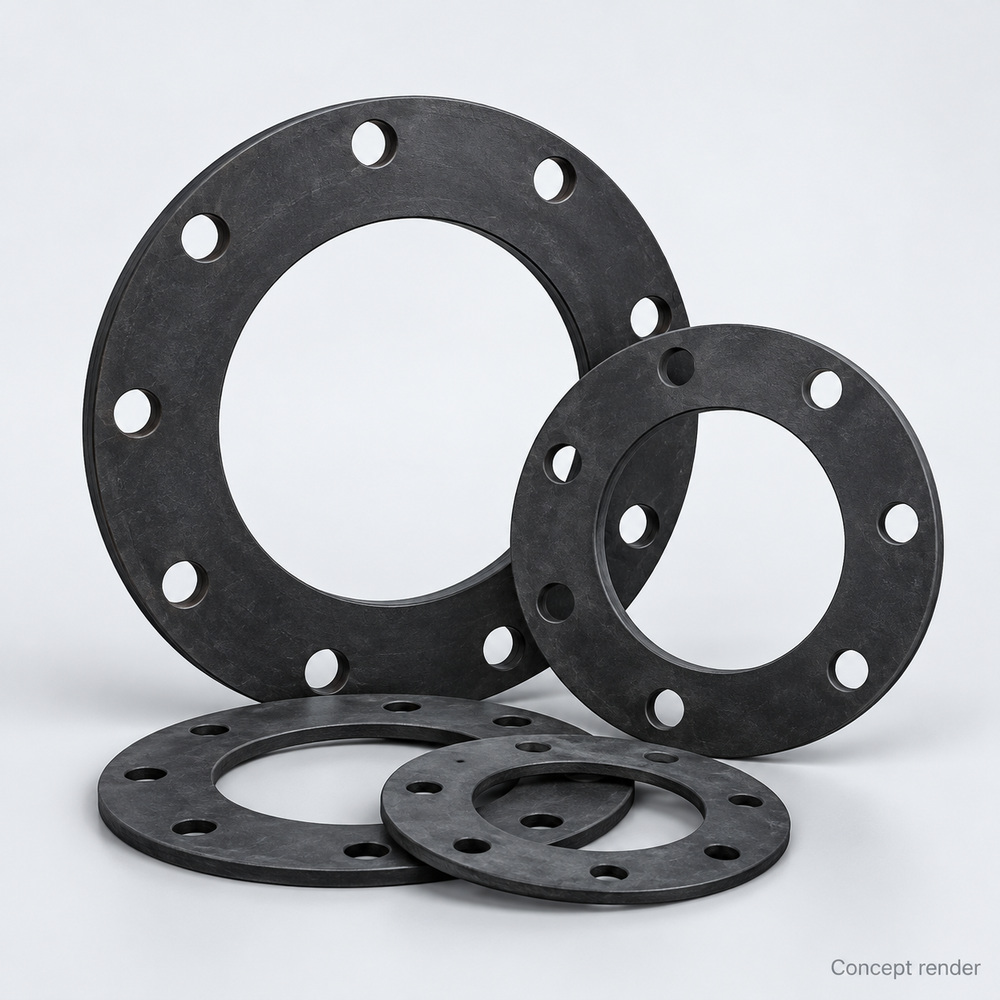
Rubber gaskets and elastomer parts cover a broad range: flat gaskets cut from sheet, strip and cord, moulded shapes, diaphragms, bellows and pipe sealing rings. Each polymer has its own strengths and limits, so choosing the right one is the main step. Globseals can help you match material, hardness and shape to your duty and quote the part cut or supplied to sample.
- NBR, EPDM, FKM, silicone
- Sheet, strip, cord, moulded
- Cut gaskets and diaphragms
- Material guidance
Overview
Elastomers recover after compression and seal at low bolt loads, which makes them well suited to flat-face flanges, covers, doors, hatches and pipe joints. They are less suitable at high temperature and in aggressive solvents, where polymer choice becomes critical. The same polymers used in O-rings are used here; see the NBR, EPDM, FKM and silicone comparison for details.
For round O-ring seals and cord, go to metric O-rings and O-ring cords.
Product types
- Rubber sheet: plain, cloth-inserted and reinforced, in various thicknesses, for cutting gaskets.
- Cut gaskets: from drawing, sample or flange dimensions; see cut and custom gaskets.
- Strip and extruded profiles: square, D-section, P-section and hollow profiles for doors and covers.
- Moulded parts: custom shapes where tooling is justified by volume.
- Diaphragms and bellows: for pumps, valves and regulators, often fabric-reinforced.
- Pipe sealing rings: EPDM or NBR rings for push-fit and flanged pipe joints.
- Rubber-to-metal bonded parts: see bonded seals.
Elastomer options
| Polymer | Typically suits | Avoid or check |
|---|---|---|
| NBR (nitrile) | Mineral oils, fuels, greases | Ozone, weathering, polar solvents |
| EPDM | Water, steam, weak acids, alkalis, outdoor use | Mineral oils and fuels |
| FKM (Viton-type) | High temperature, oils, many chemicals | Hot water or steam in some grades, amines, ketones |
| Silicone (VMQ) | Wide temperature range, ovens, air | Mechanical wear, steam, many oils |
| Neoprene (CR) | Weathering, moderate oils | Strong oxidising acids |
| Natural rubber/SBR | Water, general low-cost use | Oils, ozone |
Hardness is quoted in Shore A, with 60 to 70 common for gaskets. Values here are typical only; always confirm against the manufacturer's data for your application. Potable water and food-contact uses require technical review and the correct certification documents.
How to choose
- Name the medium, including cleaning chemicals and weather exposure.
- Give the operating temperature range, including cold starts.
- State whether the joint is static or sees movement.
- Choose polymer first, then hardness, then form.
- Check the thickness and compression: rubber seals best at modest compression and with room to bulge.
Information to send with your enquiry
The more of the following you can supply, the faster the part can be identified and quoted.
- Medium and chemical exposure
- Temperature range
- Polymer and hardness, if known
- Shape: drawing, sample, flange standard or profile section
- Thickness and tolerances
- Quantity and whether moulding is acceptable
- Photos or a sample of the old part
Genuine and compatible replacements
Customers can enquire about genuine or compatible replacement parts for equipment from manufacturers such as Burgmann, John Crane, Chesterton, Grundfos, KSB, Flygt, Lowara, Goulds, Sulzer, Flowserve, Klinger, Flexitallic, Trelleborg and others. A genuine part is supplied by or made to the original equipment manufacturer's specification and part number. A compatible part is made to fit the same dimensions and duty, usually by another manufacturer, and may differ in material or finish. A compatible rubber part can match the shape yet differ in polymer, hardness or reinforcement, which changes how long it lasts. Say whether you need an exact material match. State clearly in your enquiry which you want, and say whether a part number or sample is available.
How to buy
Globseals supports three ways to buy, and the right one depends on how well the part is defined.
- Buy online where a product listing shows a confirmed price. Products are being added to the shop progressively, so not every item in this category is listed yet.
- Request a quote for custom, bulk or unpriced items. Bulk, moulded and special-polymer items are quoted. Use the quote request page.
- Technical review when identification is unresolved. Examples include unidentified rubber, mixed chemical exposure, and regulated duty. Start with Find My Seal or upload a drawing.
You can also phone 011 079 6033 or WhatsApp 079 508 0989, or email info@globseals.com. See delivery and collection for how orders are handled; courier costs are quoted per order.
Options & specifications
| Forms available | Sheet, strip, cord, profiles, cut gaskets, moulded parts, diaphragms |
|---|---|
| Common polymers | NBR, EPDM, FKM, silicone, neoprene, natural rubber, SBR |
| Typical hardness | Shore A 40 to 90; 60 to 70 common for gaskets |
| Typical use | Covers, doors, pipe joints, flat-face flanges, diaphragms |
| Order mode | Quote; online where priced |
Options, materials and turnaround are confirmed on your written quote.
How ordering works
- 1
Identify
Gather part number, dimensions or a photo of the part.
- 2
Send
Submit it through the quote form, WhatsApp or email.
- 3
Review
Our team checks the details and asks about any gaps.
- 4
Order
Confirm the quote or buy online where a price is listed.
Frequently asked questions
Which rubber is best for water?
EPDM is the usual choice for water and weak chemicals. For drinking water, certification documents are needed, so ask for a technical review.
Why did my NBR gasket swell?
The medium was probably not compatible. NBR resists mineral oils but not many solvents and brake fluids.
Can you make a rubber gasket from a sample?
Yes, a sample or drawing is a good basis. Capability is confirmed when you enquire.
What is cloth-inserted rubber?
It is rubber sheet reinforced with fabric to improve strength under bolt load and reduce extrusion.
Is rubber suitable for high-temperature steam?
Only specific grades. EPDM is common for steam in lower ranges, but confirm temperature and pressure with the manufacturer's data.
Request a quote for Rubber Gaskets and Elastomer Products
Related services
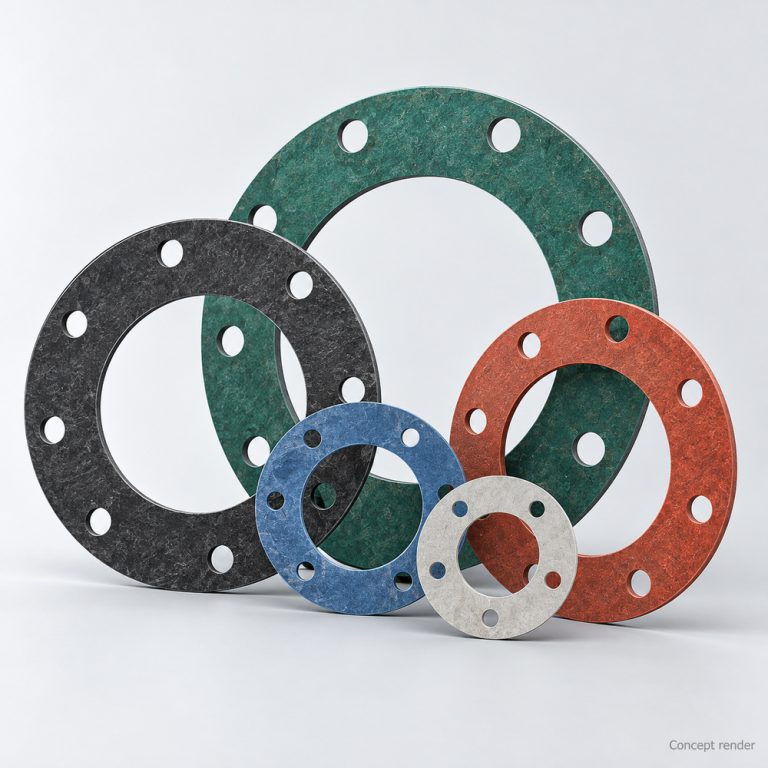 Cut and Custom GasketsMany gaskets are not available off the shelf: obsolete equipment, imported machines, non-standard flanges or special shapes. Cut…View
 Metric O-ringsMetric O-rings are described by inside diameter and cross-section in millimetres, for example 20 x 3. They are…View
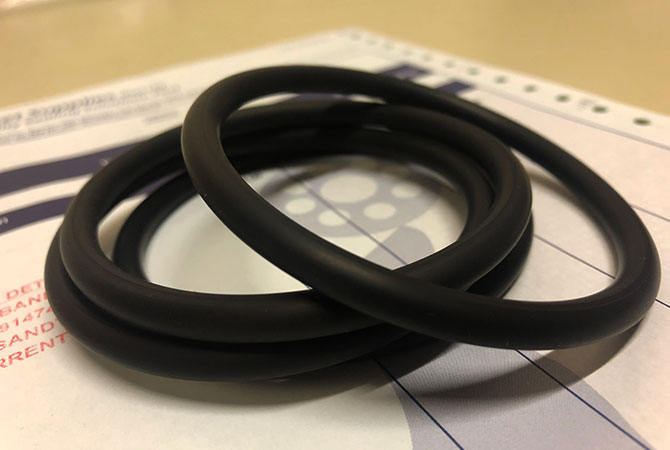 O-ring CordsO-ring cord is round-section elastomer supplied in lengths or coils, used to make O-rings that are not available…View
 Bonded SealsA bonded seal is a metal washer with an elastomer sealing ring vulcanised to its inside edge. It…View
- NBR, EPDM, FKM and Silicone ComparisonFour elastomers account for a large share of O-rings and rubber seals: nitrile (NBR), EPDM, fluoroelastomer (FKM) and…View
 Request a QuoteUse this page for custom, bulk or unpriced items, or whenever you want a written quotation. A good…View
 Imperial O-ringsImperial O-rings are sized in inches, most commonly to the AS568 standard used on American-built equipment, and to…View
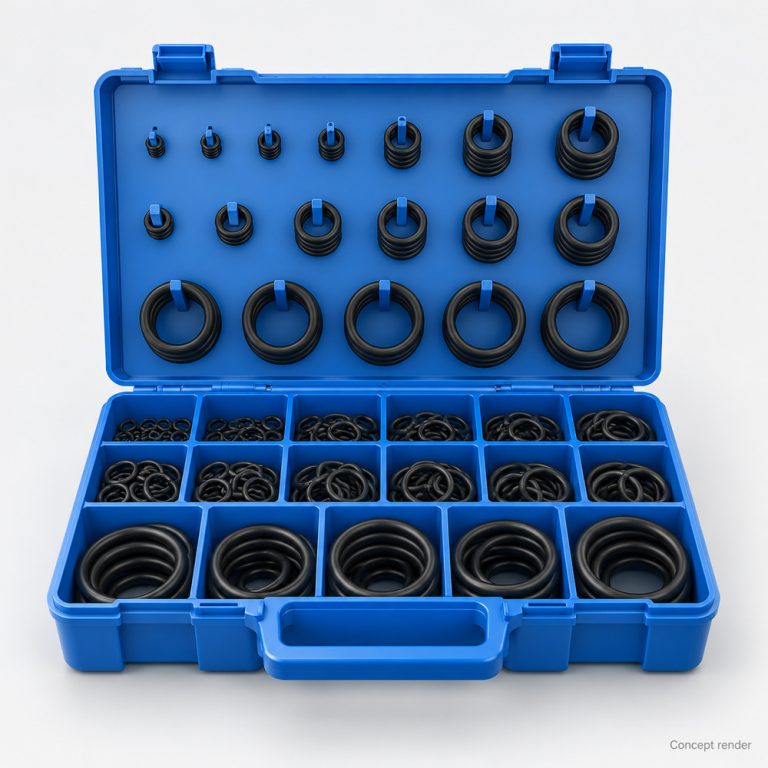 O-ring KitsAn O-ring kit is a boxed assortment of common sizes in one compound, designed so that a maintenance…View
Send the medium and shape for a rubber gasket quote.
Send your brief, quantities and deadline. We reply with a clear written quote and confirm the turnaround before anything goes to production.
