Rod seals
Rod Seals for Hydraulic Cylinders and Rams
The rod seal is the main barrier between pressurised oil inside a hydraulic cylinder and the outside world. It sits in the gland, around the piston rod, and must hold pressure while the rod slides in and out, leaving only a thin oil film on the rod surface. Globseals can help you identify the right rod seal from the rod diameter, groove dimensions and cylinder details, and advise on the type for your duty.
- U-cup, buffer and step seal types
- Single and tandem arrangements
- Polyurethane, NBR, FKM and PTFE
- Rod and groove based lookup
Overview
External leakage past the rod is the visible form of cylinder seal failure, and it is usually what prompts a reseal. The rod seal has to deal with the system pressure, peaks from loads that push back against the cylinder, friction, rod finish and temperature. A good rod seal leaves a very thin oil film on the rod, which the wiper wipes back on retraction, so the oil does not accumulate on the outside.
In heavy duty cylinders, a rod seal is often not alone. A buffer seal upstream absorbs pressure peaks and shields the main seal, a rod seal carries out the main sealing, and a wiper (see Wiper and Scraper Seals) excludes dirt. A wear ring or guide bush (see Wear Rings and Guide Rings) keeps the rod centred. Rod seals face the same fluid, bore and material questions as Piston Seals, and the overall family is on Hydraulic Seals.
Rod seal profiles
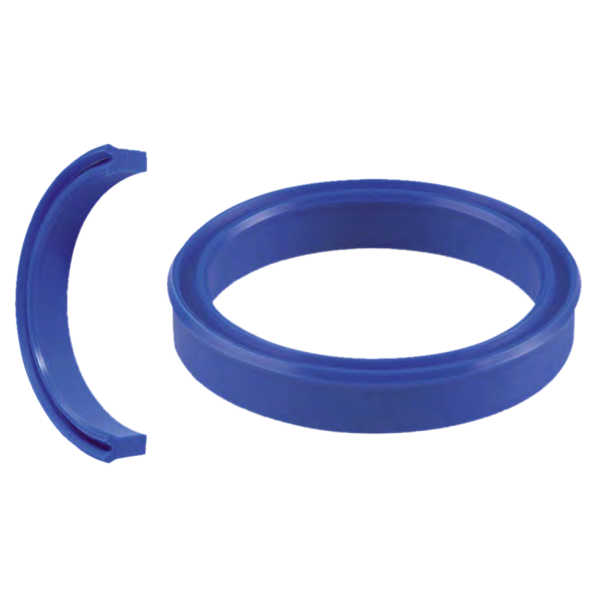
U-cup (lip) rod seals
The most common profile. A single sealing lip held against the rod by system pressure, usually in polyurethane or rubber. Simple, economical and widely interchangeable.
Buffer seals
A seal placed ahead of the main rod seal, designed to withstand pressure peaks and reduce them before they reach the main seal. A pressure-relief hole or design feature prevents trapped pressure between the seals.
Step seals (PTFE slipper with energiser)
A PTFE ring with a stepped sealing face, energised by an O-ring. Low friction, suited to high speeds and for reducing stick-slip. Needs a good rod finish and the correct groove.
Tandem rod seal arrangements
Two seals in series. One takes the main load, the second serves as backup, with a vented chamber between them. Used on long-life or critical cylinders.
Compact rod seals with integrated wiper
Single units combining sealing and wiping, used where space is short.
Chevron (V-packing) rod sets
Stacked ring sets for adjustable heavy-duty rods, as used on presses and large rams.
Rod seals for pneumatic cylinders
Light lip seals with low friction, covered in more detail on the Pneumatic Seals page.
Rod seal materials
These materials are typical only. Limits vary by grade. Always confirm against the manufacturer's data for your application.
- Polyurethane: strong against wear and extrusion, widely used in mineral-oil systems. Hot, wet and some chemical conditions may reduce life, depending on the grade.
- NBR: economical and flexible, used in lower pressure and general-duty service.
- FKM: higher temperatures and many synthetic fluids, with higher cost and less flexibility at low temperature.
- Filled PTFE (bronze, carbon, glass, graphite): low friction and wide chemical resistance, for step seals and dry or marginally lubricated service. Filler must suit the fluid and rod surface.
- Fabric-reinforced elastomer: chevron sets for large rams and shock load.
- Rod finish: typical guidance is a smooth, hard-chrome or similar finish. Rough or scored rods wear any seal quickly.
How to select rod seals
- Measure the rod diameter and groove diameter, width and depth. A used seal can give a clue but is often distorted. See the hydraulic seal measuring guide.
- Check the rod. Look for scoring, pitting or corrosion. A damaged rod will ruin a new seal.
- State pressure and pressure peaks. Peaks often drive the choice of a buffer seal.
- State speed, stroke and temperature. Fast, hot cylinders favour PTFE-based seals.
- Identify the fluid. Fire-resistant and biodegradable fluids limit compounds.
- Select the groove type: open, closed or split, which sets the possible profiles.
- Replace rod seal, wiper and bearing elements together.
Information to send us
- Rod diameter, gland groove diameter, width and depth
- Existing seal part numbers or profile photos
- Cylinder make, model and application
- Operating pressure, peaks, speed and stroke
- Fluid type and operating temperature
- Rod condition: chrome, coating, scoring
- Quantity, and whether a full kit is needed
Genuine and compatible replacements
Genuine rod seals are supplied under the cylinder maker's or seal brand's part number. Compatible seals are produced to the same groove dimensions as well-known profiles by other manufacturers. Dimensional fit is only part of it. Lip geometry, material grade and the quality of the finish affect leakage, friction and life, so for critical or heavy-duty cylinders check the material data and not just the size.
You can enquire about genuine or compatible rod seals for equipment from manufacturers such as Hallite, Trelleborg, Freudenberg/Simrit and Flowserve (for related pump equipment).
How to buy
Rod seals are usually bought with wipers and wear rings as a set.
- Buy online: where a product is listed in the online shop with a confirmed price, you can order directly. Products are being added to the shop progressively, so not every item will be listed yet.
- Request a quote: for custom, bulk, unpriced or repeat-order requirements, send us a quote request with your details.
- Technical review: if you cannot identify the part, or the application is demanding, use Find My Seal or upload a drawing and our team will review it with you.
You can also call head office in Johannesburg on 011 079 6033, or WhatsApp 079 508 0989, or email info@globseals.com.
Options & specifications
| Types | U-cup, buffer, step seal, tandem, compact, chevron |
|---|---|
| Common materials | Polyurethane, NBR, FKM, filled PTFE, fabric-reinforced rubber |
| Fitted in | Cylinder gland, around the rod |
| Used with | Wiper, wear ring, backup ring and sometimes buffer seal |
| Size reference | Rod diameter, groove diameter, width and depth |
| Typical equipment | Excavators, loaders, presses, lifts, tipping gear, industrial rams |
Options, materials and turnaround are confirmed on your written quote.
How ordering works
- 1
Inspect the rod
Check for scoring or corrosion before ordering.
- 2
Measure the groove
Record rod size and groove dimensions.
- 3
Describe the duty
State pressure, peaks, speed, fluid and temperature.
- 4
Order or review
Buy listed seals or request a quote or review.
Frequently asked questions
What is the difference between a rod seal and a buffer seal?
The rod seal does the main sealing. A buffer seal sits ahead of it and absorbs pressure peaks, protecting the rod seal. Buffer seals are common in heavy-duty and shock-loaded cylinders.
Why does my rod seal leak after replacement?
Possible causes include a scored or pitted rod, damage on installation, wrong profile or material, or an overpressure peak. The seal failure guide helps trace the cause.
Can I use a PTFE step seal in place of a U-cup?
Possibly, if the groove allows and the rod finish is suitable. The groove design differs, so ask for technical review before changing the type.
Should I replace the wiper at the same time?
Yes. A worn wiper lets dirt into the new rod seal. See wiper and scraper seals.
Can the rod be repaired?
Rod re-chroming or grinding is sometimes possible. Our hydraulic cylinder sealing support and metal machining pages describe related services, and capability is confirmed when you enquire.
Request a quote for Rod Seals
Related services
 Hydraulic SealsHydraulic seals contain pressurised oil in cylinders, rams, presses and valves while keeping dirt out and controlling friction.…View
 Piston SealsA piston seal seals the gap between the piston and the cylinder bore so that pressure on one…View
 Wiper and Scraper SealsA wiper, also called a scraper or dust seal, sits at the outer end of a cylinder gland…View
 Wear Rings and Guide RingsWear rings, also called guide rings, bearing rings or wear bands, are non-sealing rings that keep a piston…View
- Hydraulic Cylinder Sealing SupportA leaking or drifting hydraulic cylinder usually needs the right seal kit, not guesswork. Globseals supports customers with…View
 Pneumatic SealsPneumatic seals work in compressed-air systems, where the medium is a gas, pressures are lower than in hydraulics…View
 Rotary Shaft and Oil SealsRotary shaft seals, commonly called oil seals, keep lubricant in and contaminants out where a rotating shaft passes…View
 Bonded SealsA bonded seal is a metal washer with an elastomer sealing ring vulcanised to its inside edge. It…View
Send the rod diameter and groove details and we will help you identify the right rod seal.
Send your brief, quantities and deadline. We reply with a clear written quote and confirm the turnaround before anything goes to production.
