
Selection guide
Gasket Material Selection Guide
No single gasket material suits every flange. Choosing well means matching the material to the medium, temperature, pressure, flange condition and bolt load. This guide gives a general overview of the main material families and the questions to answer before you order.
- Medium first
- Temperature
- Pressure and bolt load
- Flange condition

Questions to answer first
- What is the medium? Water, steam, oil, fuel, acid, solvent, gas or food product.
- What are the temperature and pressure? Include peaks, cycling and start-up or shutdown conditions.
- What flange are you sealing? Type, size, rating, face finish and material.
- How much bolt load is available? Soft materials need enough load to seat, and weak flanges may not provide it.
- Is the duty cyclic, vibrating or thermally shocked?
Main material families
| Family | Typical character | Notes |
|---|---|---|
| Compressed fibre sheet | General-purpose sheet for water, oils and many industrial services | Binder and fibre type affect suitability; not for every chemical or high-pressure steam duty |
| Rubber and elastomer sheet | Flexible, seals on low bolt loads | Choose elastomer to suit the medium; see the comparison guide |
| PTFE and filled PTFE | Broad chemical resistance | Can creep under load, so design and bolting matter |
| Flexible graphite | Heat and wide chemical range | Oxidises at high temperature in air; reinforced types are available |
| Spiral wound and metallic | For higher pressure and temperature flanges | Need suitable flange finish and bolt load |
| Cork, paper and composite | Light-duty, low-pressure covers and fittings | Not for demanding duties |
The figures that set the limits are published by the manufacturer of each grade, so use the data sheet for your selected product. Always confirm against the manufacturer's data for your application.
Our related ranges
See gasket sheets and materials, spiral wound gaskets, PTFE gaskets, graphite gaskets and ring and full-face gaskets. Rubber gaskets and elastomer products covers elastomer parts. If you need a shape cut from sheet, see custom gasket manufacturing.
A simple selection process
- Write down the medium, temperature range and pressure.
- Shortlist two or three material families that are generally used for that medium.
- Check the flange type and bolt load against the gasket style.
- Check the manufacturer data sheet for the shortlisted grade at your conditions.
- For unusual or critical duty, ask for technical review before you order.
Thickness, size and flange details
Thin gaskets generally seal better on good flanges because they need less load to seat and are less prone to blow-out, while thicker ones tolerate rough or uneven faces. The gasket must match the flange bolt circle, inside diameter and outside diameter. See the guide to gasket dimensions and flange details.
Limitations
- The table gives general characteristics only, not limits.
- Two grades in the same family can behave very differently.
- Gaskets in oxygen, hydrogen, aerospace, food-contact, pharmaceutical or potable water service require technical review and the correct certification documents.
- Steam, strong oxidisers, hot oils and aggressive chemicals need specific grade confirmation.
- Poor installation can defeat a correct selection; see causes of seal failure.
What to send us
Medium, temperature, pressure, flange details or drawing, quantity and any certification requirement. Request a quote or upload a drawing.
Options & specifications
| Families | Fibre, rubber, PTFE, graphite, spiral wound, cork |
|---|---|
| Key inputs | Medium, temperature, pressure, flange |
Options, materials and turnaround are confirmed on your written quote.
How ordering works
- 1
Medium
Define the fluid.
- 2
Conditions
Temperature and pressure.
- 3
Flange
Type and bolt load.
- 4
Check data
Manufacturer data for the grade.
Frequently asked questions
What is the best all-round gasket material?
There is none. The best choice depends on the medium, temperature, pressure and flange. A general-purpose sheet suits many water and oil duties, but you should confirm for your application.
Can I use the same gasket for steam and water?
Not automatically. Steam is more demanding, so check the specific grade's data for steam service.
Do you cut gaskets to size?
Yes, cut and custom gaskets are available; capability is confirmed when you enquire.
Explore
 Gasket Sheets and MaterialsGasket sheet is flat material sold in sheets, rolls or cut pieces, from which gaskets are cut for…View
 Spiral Wound GasketsSpiral wound gaskets seal pipe flanges where pressure, temperature cycling or aggressive media rule out a plain sheet…View
- PTFE Gaskets and SealsPTFE is chosen where chemical resistance matters more than elasticity. It is used for gaskets, envelope gaskets, joint…View
 Graphite Gaskets and PackingFlexible graphite is the standard answer for high-temperature joints in steam, thermal oil and hot process lines, and…View
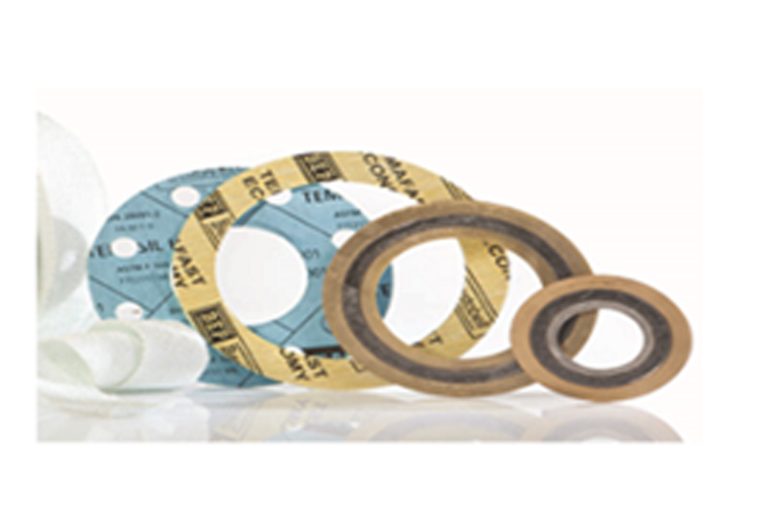 Custom Gasket ManufacturingWhen a flange, cover or housing has no off-the-shelf gasket, a custom-made part is the practical answer. Globseals…View
- Understanding Gasket Dimensions and Flange DetailsA gasket order is only as good as the dimensions behind it. This guide explains the terms used…View
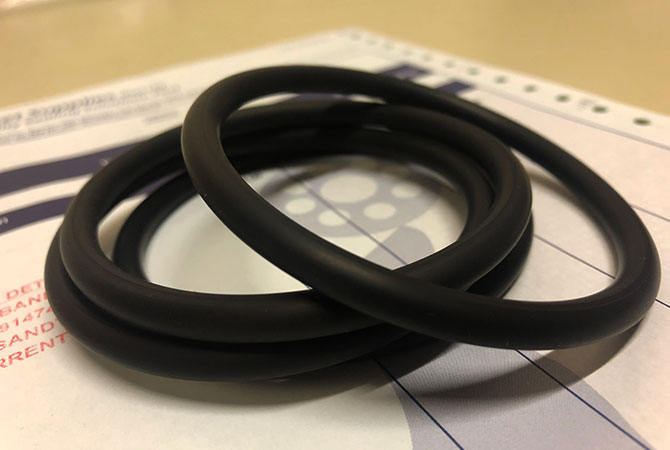 How to Measure an O-ringAn O-ring is defined by two dimensions and a material. Get the inside diameter and cross-section right, note…View
 How to Measure a Hydraulic SealHydraulic seals are normally specified by groove dimensions, because the seal must fit a particular housing. This guide…View
Tell us your medium and flange for a gasket recommendation.
Send your brief, quantities and deadline. We reply with a clear written quote and confirm the turnaround before anything goes to production.
